
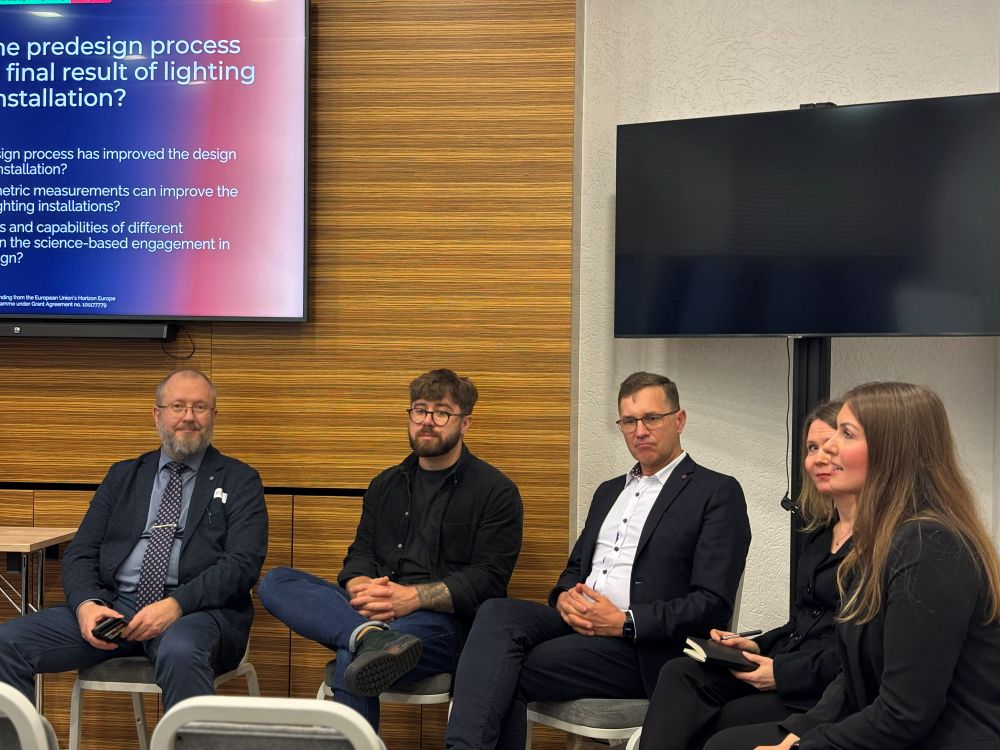
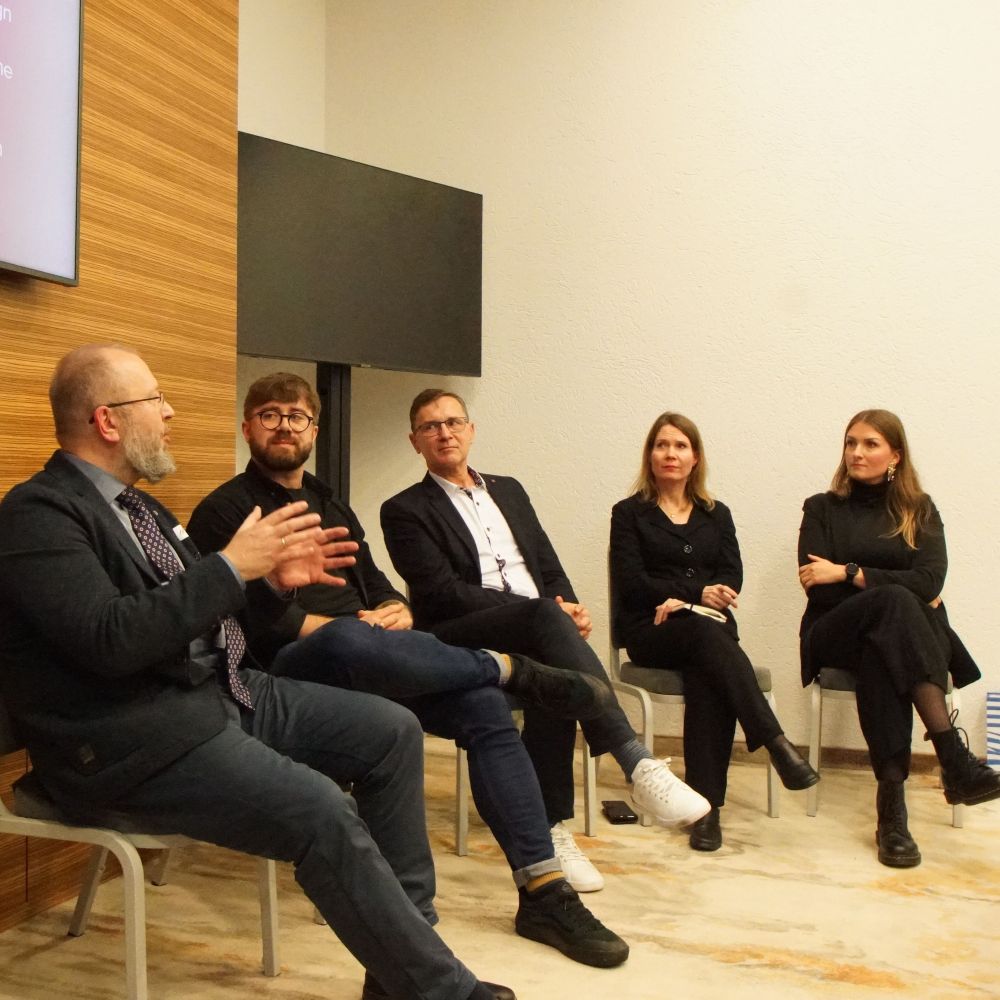
A panel discussion organised during the Art of Darkness General Assembly in Tallinn brought together five practitioners and researchers to examine how pre-design and co-design processes shape lighting outcomes, in line with the project’s framing that treats darkness as a design resource rather than a defect. The discussion consistently linked better results to early, structured collaboration across design, engineering, research, and municipal procurement.
panelists
“How has the predesign process affected the final result of lighting installation?”
- Mariliiis Kundla, lighting designer, AETHER Lighting Design, Estonia
- Henrika Pihlajaniemi, associate professor, University of Oulu, Finland
- Alar Võrk, CEO, co-founder, Lumoflex OÜ, Estonia
- Joan-Tähven Vene, street lighting and electricity network project manager, Tallinn Municipality, Estonia
- Argo Rosin, professor Tallinn University of Technology, Estonia
THE NEED TO ENGAGE DESIGN EARLY
A core theme was that lighting quality is determined mainly before detailed design begins.
Mariliis argued that if a lighting designer is engaged late, the work tends to collapse into minimum compliance — delivering illumination levels while losing opportunities to shape atmosphere, comfort, and spatial hierarchy. Early involvement enables iterative testing (including on-site trials), integration with architecture and materials, and better resolution of practical constraints such as wiring and power placement.
The panel also suggested that even new buildings should be approached with a heritage-like sensitivity: restrained light levels, attention to context, and design decisions that respect the space rather than simply flooding it with brightness.
PROCUREMENT AS A DECISIVE TOOL
Several contributions addressed how municipalities can institutionalise early lighting expertise.
Joan-Tähven described procurement as a decisive tool: even without a national qualification standard for lighting designers, tenders can specify measurable competence (education and/or membership in recognised professional lighting associations).
This approach helps ensure that lighting design is not treated as a generic electrical task and can be embedded from the start, especially in recurring streetscape conditions where templates and repeatable solutions may be appropriate while still reserving bespoke design for sensitive sites, such as heritage contexts.

standards, measurement and creativity
The panel then explored the relationship between standards, measurement, and creativity. Mariliis questioned whether prevailing illumination norms are systematically too high in Nordic contexts and argued that the human eye adapts to darkness more than is commonly assumed. Participants challenged the tendency toward uniform lighting, noting that design should prioritise human experience rather than camera-like representations of luminance.
At the same time, the discussion did not support abandoning standards. Instead, it emphasised reframing measurement as a learning and verification tool: assessing whether a design has achieved its intended experiential outcomes, not only whether it satisfies numeric thresholds. Henrika reinforced this position by describing research directions that analyse luminance patterns in urban scenes to connect measurable properties to perceived qualities better.
From the implementation side, Alar from Lumoflex emphasised feasibility constraints. Many advanced concepts are technically possible but not necessarily economical, maintainable, or operationally simple at the city scale. Outdoor motion sensors were given as an example where costs can outweigh benefits depending on location and use.
The panel also noted that control interfaces and operating logic differ substantially between routine street lighting management (fault detection, dimming, map-based oversight) and architectural or scene-based lighting, creating usability challenges if systems are combined without careful planning.
Despite differing viewpoints, participants converged on the importance of control systems for future-proofing. Because lighting is often over-dimensioned initially to account for lumen depreciation over its life cycle, dimming and adaptive controls can reduce glare and energy use while keeping performance stable over time. Controls also preserve flexibility: if a context changes or if user feedback indicates discomfort, settings can be tuned without replacing hardware. This view aligned with Argo Rosin’s emphasis on the broader engineering challenge of linking subjective experience—comfort, perceived safety, atmosphere—to measurable parameters that can guide decisions in a repeatable way.
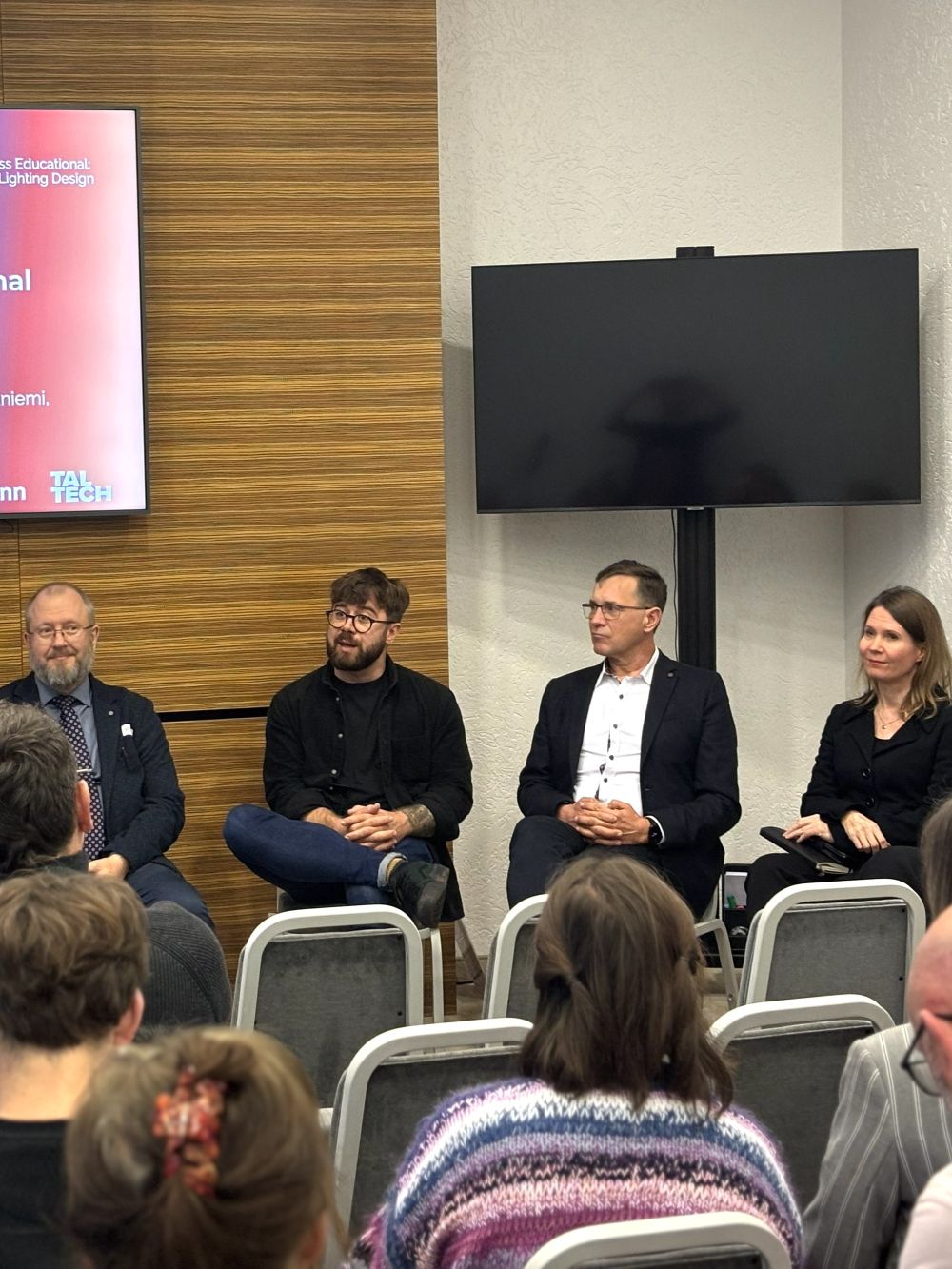
The panel’s conclusions
The closing discussion identified several knowledge gaps that collectively define an applied research agenda.
First, participants highlighted the difficulty of translating subjective experience into robust design guidance: understanding “for whom” lighting is designed, how different groups perceive brightness and darkness, and how cultural expectations shape preference.
Second, the panel emphasised that contemporary LED optics and spectra raise unresolved questions about glare, comfort, and whether existing standards—many rooted in older lighting technologies—remain appropriate.
Third, an explicitly ecological perspective emerged: lighting design should better account for humans as organic beings embedded in environments, with greater attention to the impacts of flora and fauna rather than focusing solely on human visual performance.
Overall, the panel’s main conclusion was pragmatic: high-quality, context-sensitive lighting is less a matter of choosing fixtures late in a project and more a matter of early co-design, procurement structures that secure competence, and measurement practices that support—not replace—design intent.
Standards should remain as baseline safeguards, but the field now needs better evidence, better tools, and more interdisciplinary collaboration to design for comfort, ecological responsibility, and culturally appropriate darkness as well as light.
Text: ©Tarmo Korõtko / Photos: © Rodrigo Barbosa and TalTech