
This autumn, the Art of Darkness project took part in Researchers’ Night through two of its partner institutions: the University of Oulu (project coordinator) and the University of Bologna (UNIBO). In Oulu and Bologna, the project reached very different audiences and urban settings, but with a shared objective: engaging citizens in reflecting on darkness, light, and their role in shaping urban experience after dark.
What is Researchers’ Night?
Researchers’ Night is a Europe-wide public event initiative that opens the world of research to citizens through hands-on activities, artistic interventions, demonstrations, and direct interaction with researchers.
Held annually at the end of September in dozens of cities, it aims to demystify science, highlight its social relevance, and promote citizen participation in research. Public engagement, co-creation, and dialogue are central to the format — making it a natural platform for Art of Darkness, which places citizens’ perceptions and experiences at the core of its research approach.
Oulu: citizen science at scale
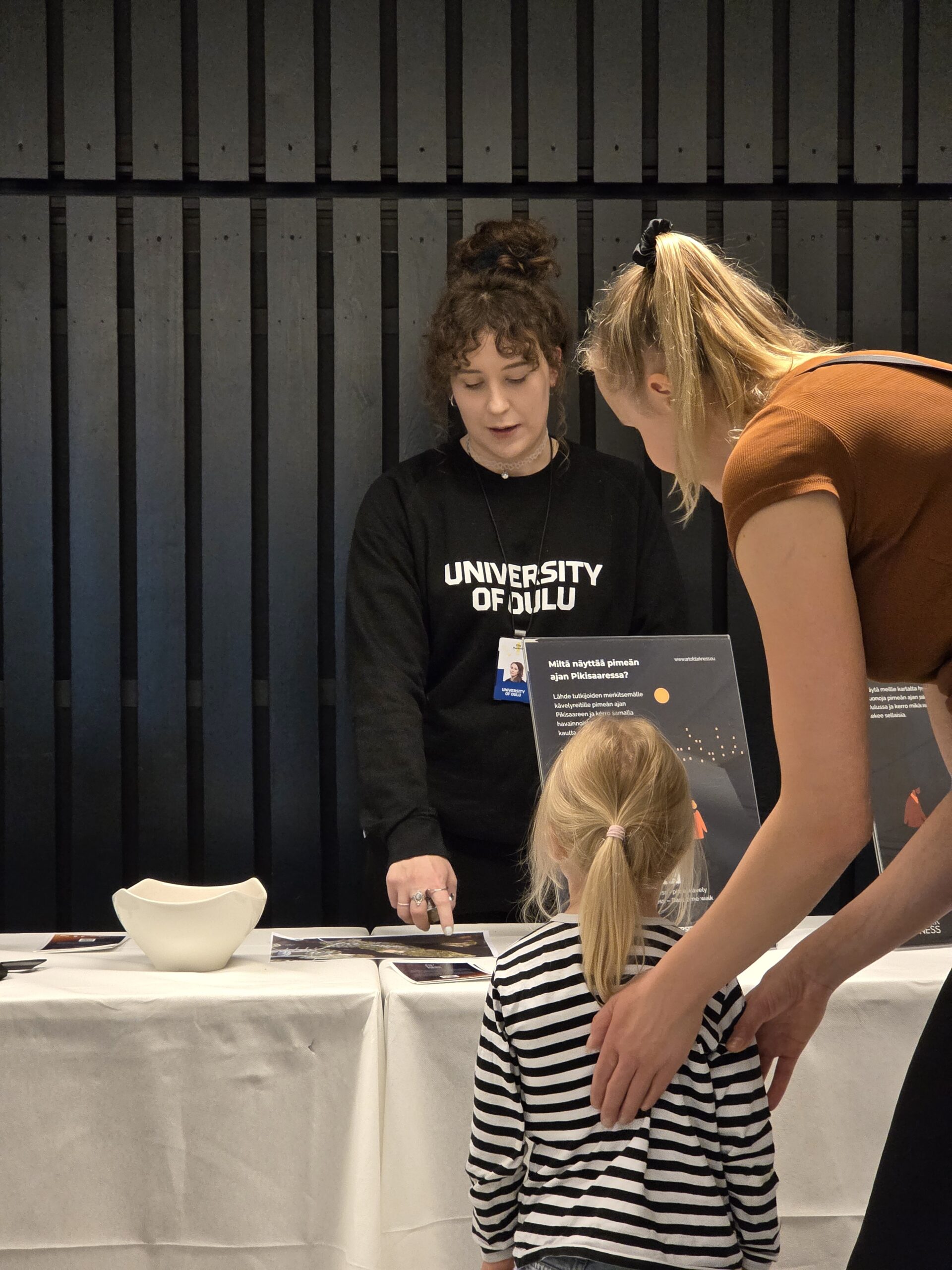
At the University of Oulu, Researchers’ Night 2025 was hosted indoors at the Linnanmaa campus and attracted around 3,000 visitors, with nearly 50 workshops and stands and the involvement of approximately 200 researchers and staff members.
Art of Darkness was present with a dedicated stand, coordinated by researchers Ella Kantola and Outi Parhankangas. The setup was intentionally simple and approachable: informal conversation, printed materials, a roll-up, and an animated presentation explaining how the GIS surveys work and how citizens can take part. Over the course of the evening, more than 100 in-depth interactions were recorded, during which visitors discussed and explored the project’s GIS questionnaires.
The stand was also embedded within a broader programme focused on citizen participation in science. Visitors were explicitly invited to contribute to research by mapping “good” and “bad” dark-time places in Oulu — positioning darkness not as a deficit, but as a meaningful component of urban life worthy of observation and debate.
Bologna: darkness as cultural narrative
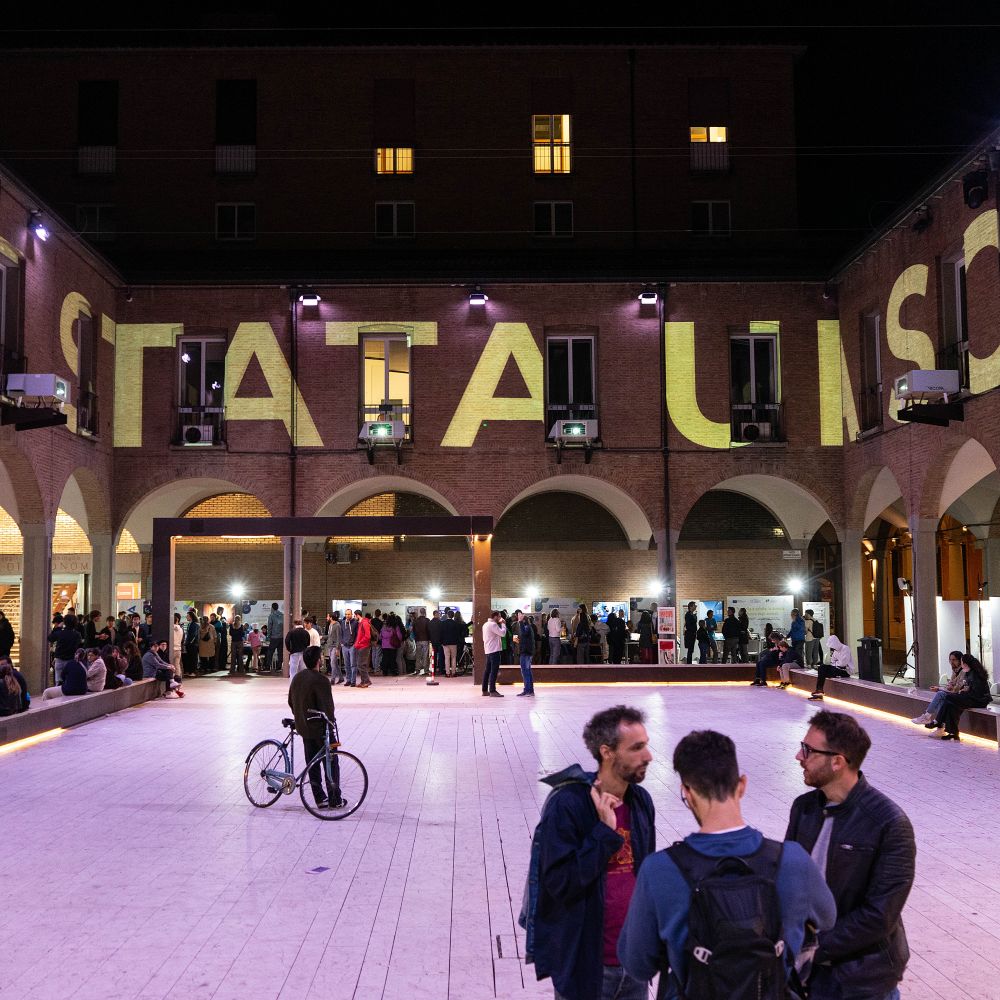
In Bologna, Art of Darkness took a more explicitly artistic and spatial form during Researchers’ Night, held at Piazza Scaravilli, one of the pilot sites of the project. The research team from the UNIBO Department of Architecture presented a looped video projection and a sequence of lighting scenarios on the façades of the square.
Drawing on the project’s research as well as interviews with experts and stakeholders, the installation invited passers-by to reflect on the cultural significance of light and darkness within historic urban contexts.
The evening also featured a video produced by the UNIBO Communication Office, paying tribute to Ulisse Aldrovandi and his “theatre of nature”, reinforcing the link between scientific observation, cultural heritage, and contemporary research.
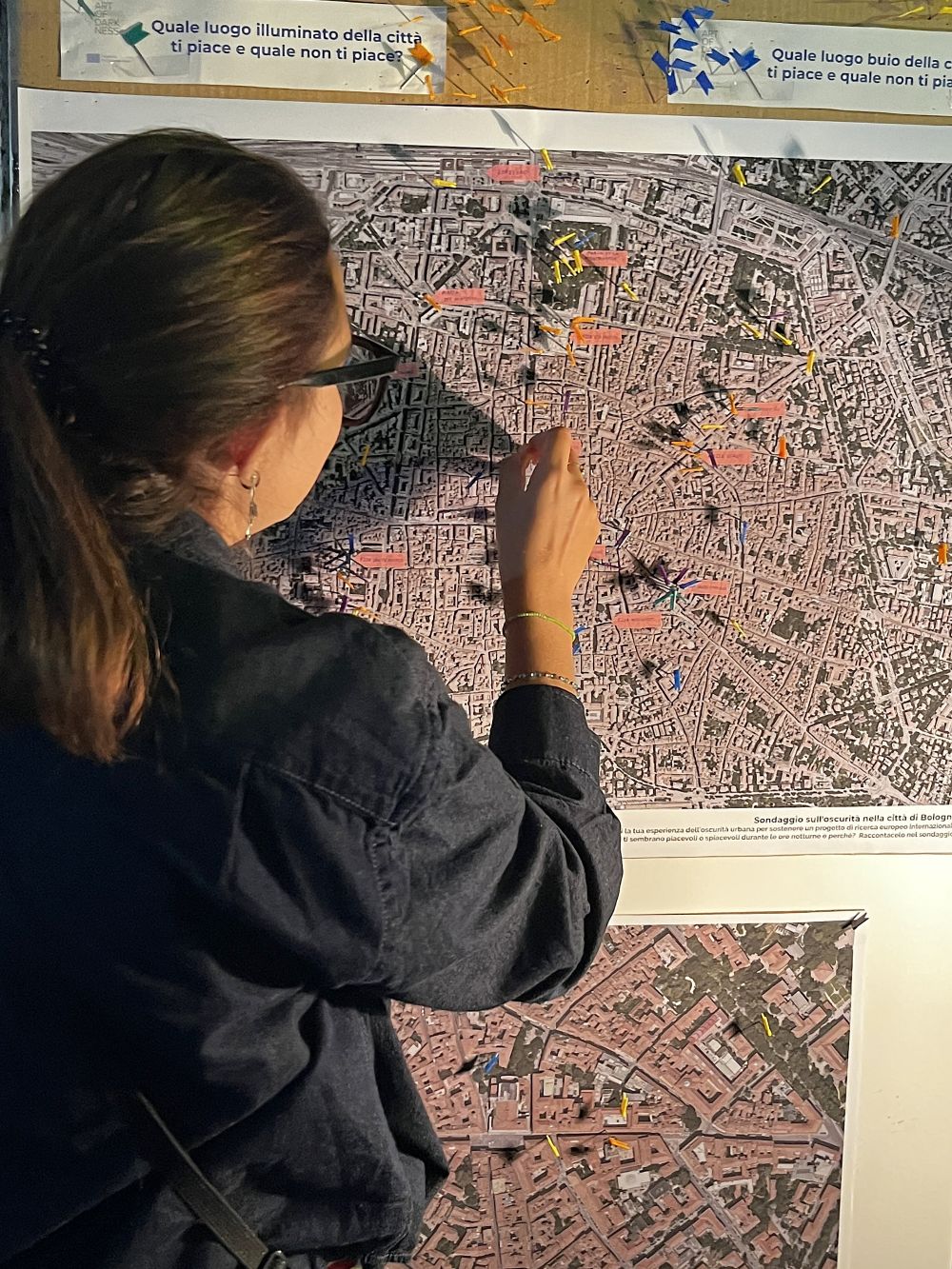
Alongside the visual intervention, the UNIBO team introduced the Art of Darkness GIS Survey and an analogue, map-based game designed to capture citizens’ perceptions of nighttime Bologna. Together, these tools opened space for dialogue on how lighting choices influence atmosphere, memory, and everynight use of the city after dark.
You can take part in the GIS surveys!
The experiences in Oulu and Bologna confirm a key insight of the project: citizens are eager to share their perceptions of darkness when offered accessible and meaningful ways to do so. The Art of Darkness GIS Surveys remain open and are central to the project’s ongoing research across Europe.
If you haven’t yet taken part, you can still contribute by mapping your experiences of urban darkness and light!
Photos: © University of Oulu and UNIBO