
What does “good lighting” actually mean at night? And more importantly for the Art of Darkness project: what role should darkness itself play in shaping urban environments? These are not abstract questions. They require measurable, comparable, and context-aware data. This is precisely where photometric measurements come in: in the quest to reclaim darkness in our cities, precise data is king.
Across its five pilot sites — Copenhagen, Tallinn, Bologna, Montpellier, and Oulu — the Art of Darkness project has conducted a large-scale measurement campaign to document how light and darkness interact in real urban settings. Led by the research team at TalTech, these measurements provide a shared analytical foundation for the project, ensuring that future lighting interventions are grounded in evidence.
The objective is clear: understand existing conditions, identify challenges, and build a robust framework for designing with both light and darkness.
Why measure? A necessary baseline
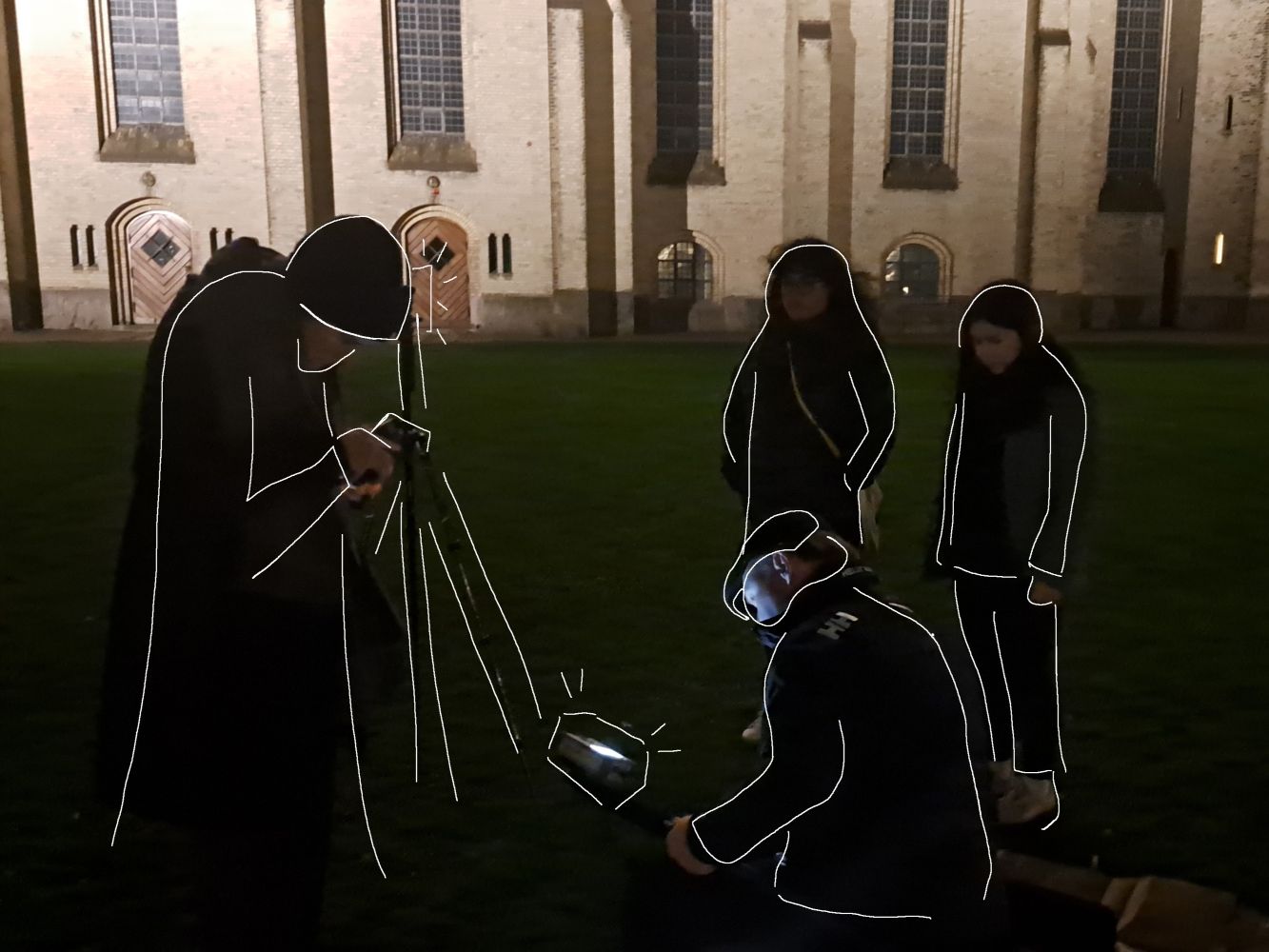
At its core, photometry captures how light interacts with surfaces and spaces. TalTech deployed specialised gear, including a luminance camera for imaging brightness distribution and illuminance meters for ground-level light levels.
Luminance assesses how surfaces appear to the eye — crucial for spotting glare or shadowy voids — while illuminance ensures paths are navigable without overkill brightness. Glare evaluations, where relevant, gauge discomfort from stray light.
By capturing these key parameters, the Art of Darkness project can move beyond subjective impressions. It becomes possible to assess how lighting is actually perceived, how it structures space, and how it affects the experience of the night.
A rigorous yet adaptive methodology
All measurements were conducted by TalTech’s Microgrids and Metrology Research Group, ensuring methodological consistency across all pilot sites.
The workflow was rigorous, requiring close coordination and pre-site planning with local partners, municipalities, and site managers to map lighting fixtures, followed by on-site data grabs in controlled scenarios (lights on/off, dimmed, or dynamic). Measurements spanned multiple points — facades, paths, viewpoints — to build spatial maps.
The campaigns followed established standards for outdoor lighting assessment, while remaining flexible enough to adapt to highly diverse environments.
In practical terms, each site was approached through a combination of:
- Luminance imaging, capturing how surfaces are perceived by the human eye
- Illuminance measurements, assessing functional lighting levels for movement and orientation
- Glare evaluation, identifying potential visual discomfort
- Spectral and colour analysis, understanding the qualitative characteristics of light sources
However, the process was far from purely technical. In some cases, measurements took place in controlled conditions — such as closed parks — while in others, they had to be carried out in active public spaces, with all the unpredictability that entails.
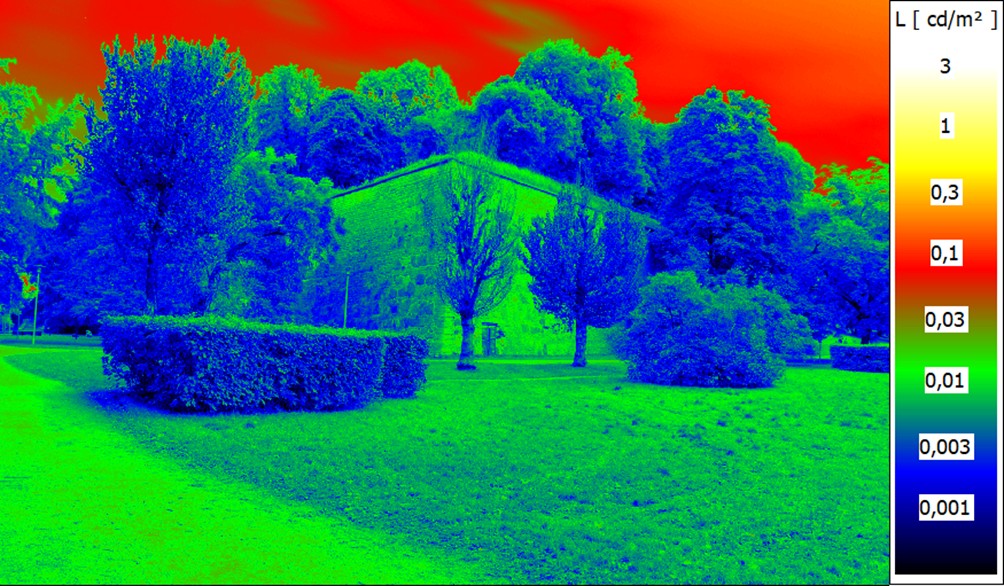
A recurring insight from the TalTech team was that measuring darkness is often more complex than measuring light. In very low-light environments, luminance measurements became the most time-consuming part of the process — not only due to the sensitivity of the equipment, but because these devices are designed to replicate human visual perception. Just as the human eye adapts slowly to darkness, measurement instruments must operate under similar constraints, capturing and analysing light in conditions that require longer acquisition times and careful calibration.
These constraints are not just technical limitations — they are revealing. They expose how little conventional approaches account for low-light environments, while at the same time making visible subtle spatial qualities of the night that are usually overlooked.
Five pilot sites, five distinct realities
One of the strengths of the measurement campaign lies in the diversity of its contexts. Each pilot site presents a different relationship between light, space, and use.
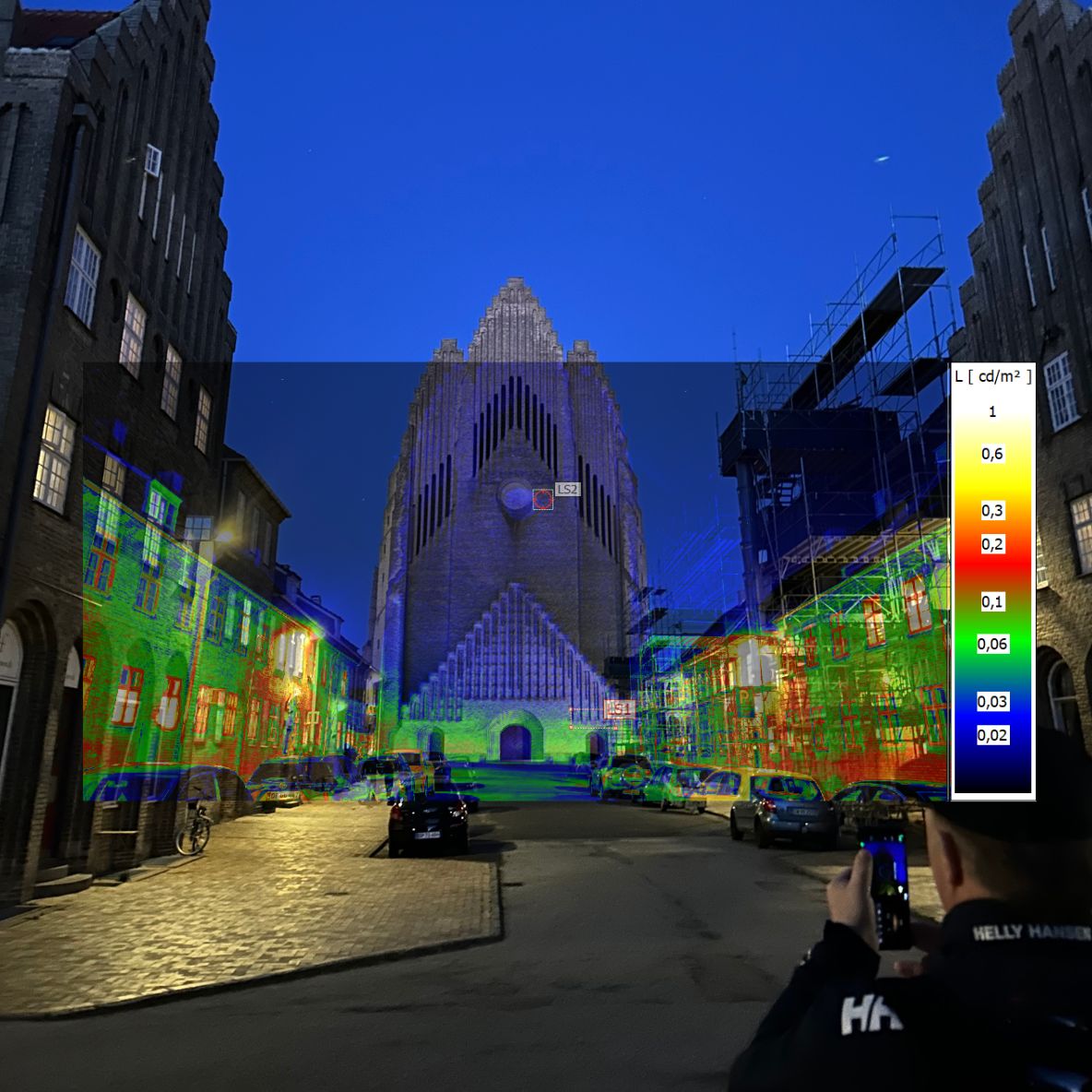
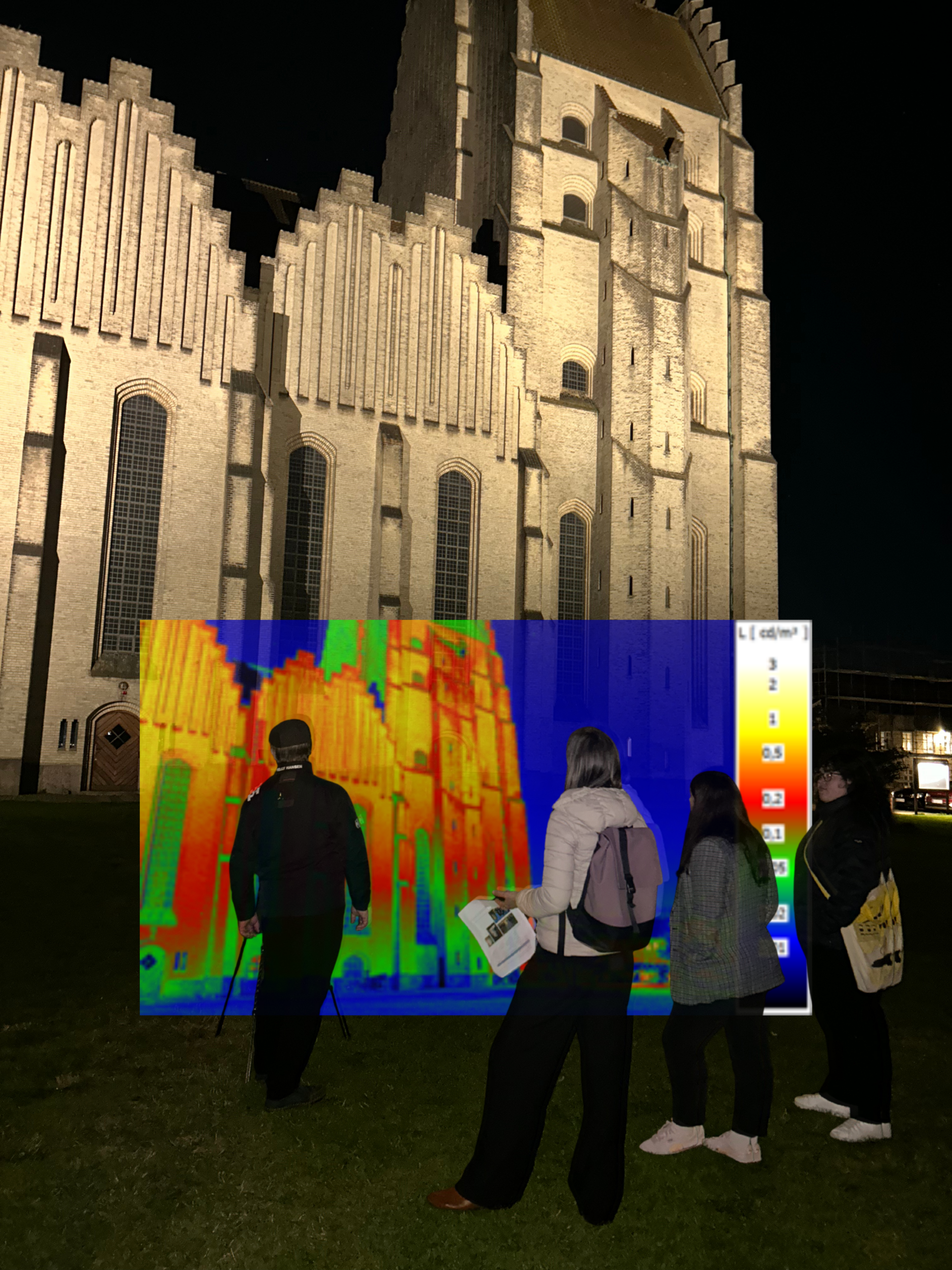
At Bispebjerg Square in Copenhagen, the focus was on the iconic Grundtvig’s Church and how architectural lighting shapes perception.
By measuring the church façade from multiple viewpoints and distances, the team explored how brightness, contrast, and shadow influence the way the building is experienced at night.
The site also became a testing ground for discussing glare, shadow formation, and the consequences of poorly calibrated lighting.
The key takeaway: lighting is not just about visibility — it fundamentally alters how space is read and understood.
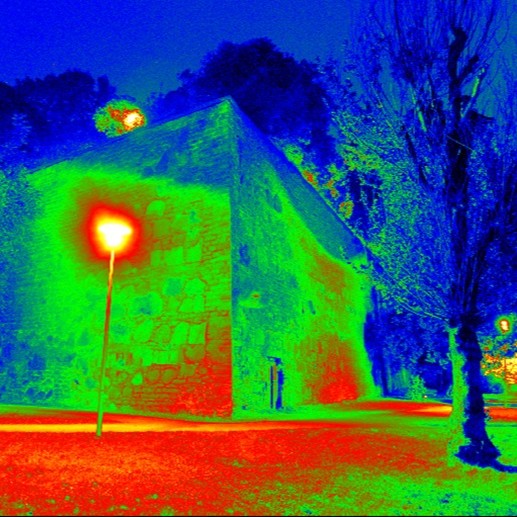
In Tallinn’s Hirvepark, the objective was different: document existing conditions before any intervention.
This baseline approach revealed significant gaps in the current lighting system. Measurements showed that certain pathways remained largely unlit, even when lighting was active, highlighting inconsistencies in spatial coverage.
The campaign also exposed a practical challenge: in very low-light environments, luminance measurements become time-intensive due to equipment sensitivity. In Tallinn, this extended the measurement process well into the early morning hours.
Beyond the data itself, the pilot demonstrated the importance of coordination between the municipality, infrastructure operators, and researchers — an essential condition for future implementation.
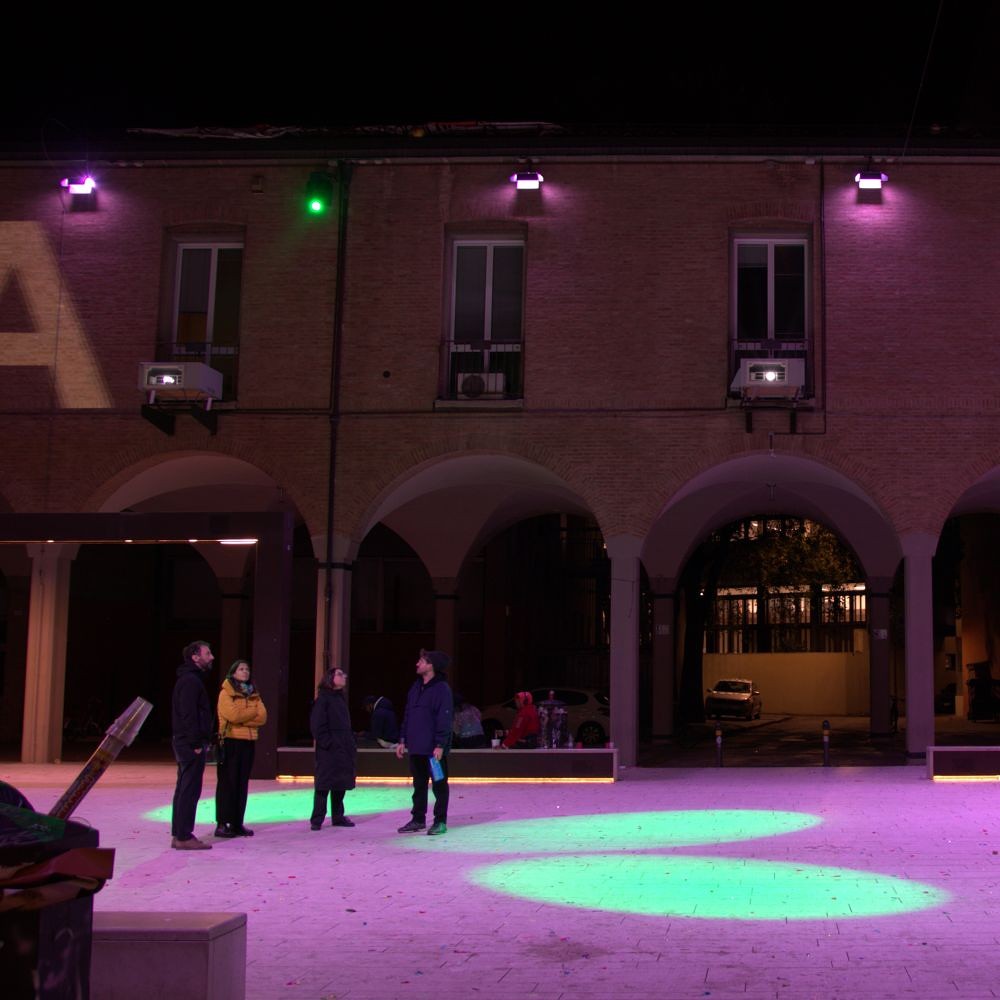
Bologna presented a radically different scenario. At Scaravilli Square, the team had to assess a dynamic video-mapping installation — an environment where lighting conditions change continuously over time. This introduced a level of complexity not encountered in other pilots.
The site combined multiple, irregular light sources with a constantly evolving visual composition. On top of that, the space remained fully active during measurements, meaning that movement, occupancy, and environmental variability had to be factored in.
This required adaptive strategies and highlighted a key limitation: traditional measurement approaches are not always fully suited to dynamic lighting environments.
At the same time, it expanded the project’s scope, demonstrating that contemporary urban lighting cannot be reduced to static systems.
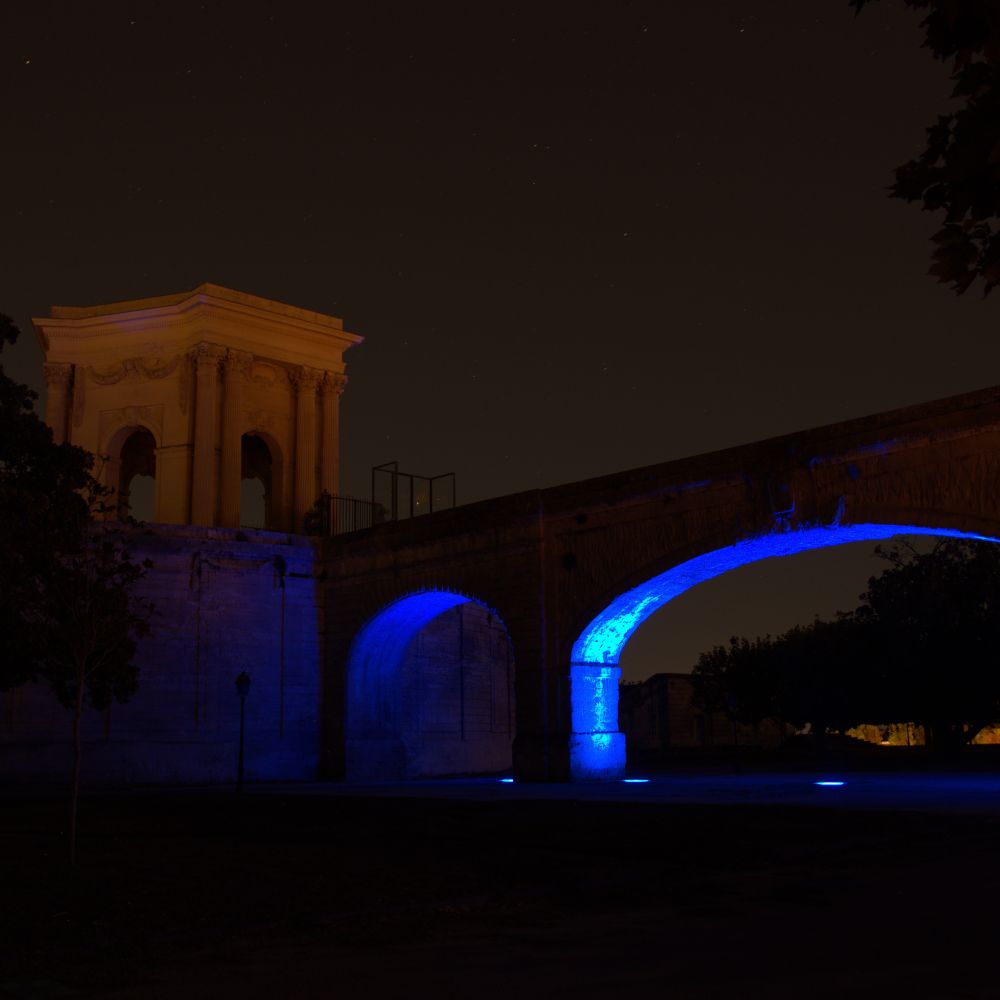
In Montpellier’s Place of Peyrou, the focus shifted to user experience.
Here, the measurements were designed to understand how lighting supports movement through space, while also contributing to the overall atmosphere of the park. By combining luminance and illuminance data along pathways, the team could assess whether lighting levels were adequate for safety without compromising the nocturnal character of the site.
A second layer of analysis focused on heritage elements. The measurements examined how monuments relate visually to their surroundings — whether they stand out clearly or blend into the ambient light.
This notion of visual hierarchy is critical in historic environments, where lighting plays a key role in structuring perception.
The Oulu pilot on Pikisaari Island pushed the methodology to its limits.
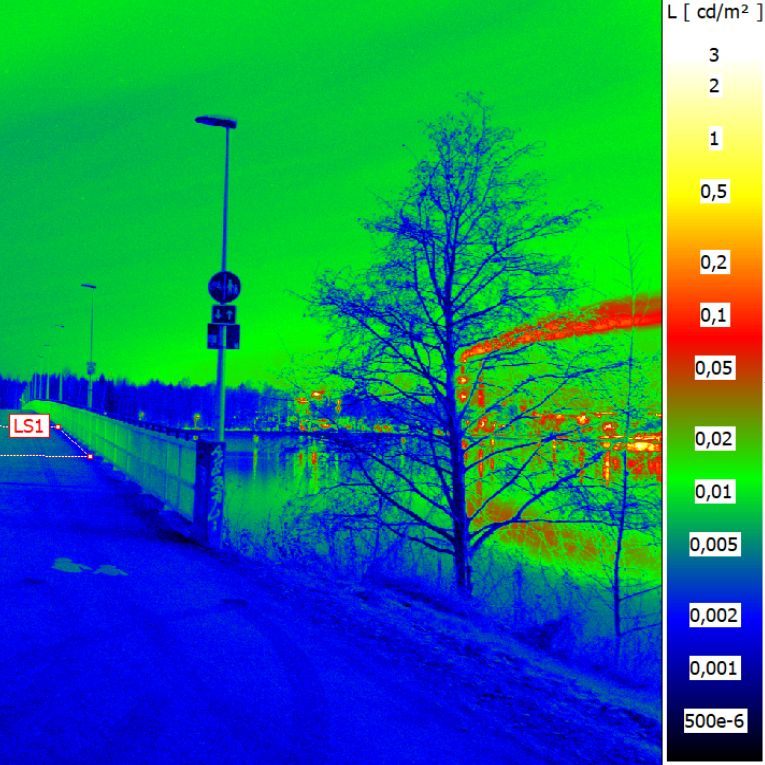
Unlike the other sites, this environment is defined by the presence of natural darkness. Large areas remain minimally lit, offering a rare opportunity to study how darkness itself can be preserved and integrated into urban design.
To enable accurate measurements, most artificial lighting had to be temporarily switched off. This created extremely low-light conditions, raising both technical and safety challenges.
At the same time, it allowed the team to assess light pollution and the localised impact of individual light sources within a predominantly dark landscape.
The insight here is fundamental: darkness is not simply the absence of light — it is a resource that can be shaped, protected, and designed..
From hard data to design
Taken together, the five pilot sites provide a comprehensive picture of how light and darkness operate across different urban contexts — from dense city centres to heritage parks and nature-oriented environments.
Across the different sites, common threads emerged: uneven coverage, low-light hurdles, and the need for tailored designs.
By establishing a shared, evidence-based understanding of existing conditions, the project can move toward:
- Designing lighting interventions that are context-sensitive and adaptable
- Reducing unnecessary illumination while maintaining usability and safety
- Enhancing spatial perception and cultural identity through carefully calibrated lighting
- Integrating darkness as a deliberate and valuable component of urban design
As demonstrated throughout the process, the challenge is not simply to light cities better, but to rethink the balance between light and darkness.
A foundation for future urban nightscapes
Photometric measurements may appear technical at first glance, but their implications are far-reaching.
They provide a common language between researchers, designers, and city stakeholders. They make invisible conditions visible. And most importantly, they enable informed decision-making.
Across all five pilot sites, one message stands out: understanding the night requires more than intuition. It requires data, collaboration, and a willingness to question established practices.
The main goal of the process was not only to document how cities are lit today, but to open new possibilities for how they could be experienced tomorrow — where light is used with intention, and darkness is recognised as an essential part of the urban landscape.
Photos: ©TalTech & Julieta Cignacco