
How can cities embrace darkness while addressing safety, accessibility and quality of life? A symposium hosted by the Art of Darkness project partner Eindhoven University of Technology brought together researchers, lighting professionals and urban practitioners to explore this question.
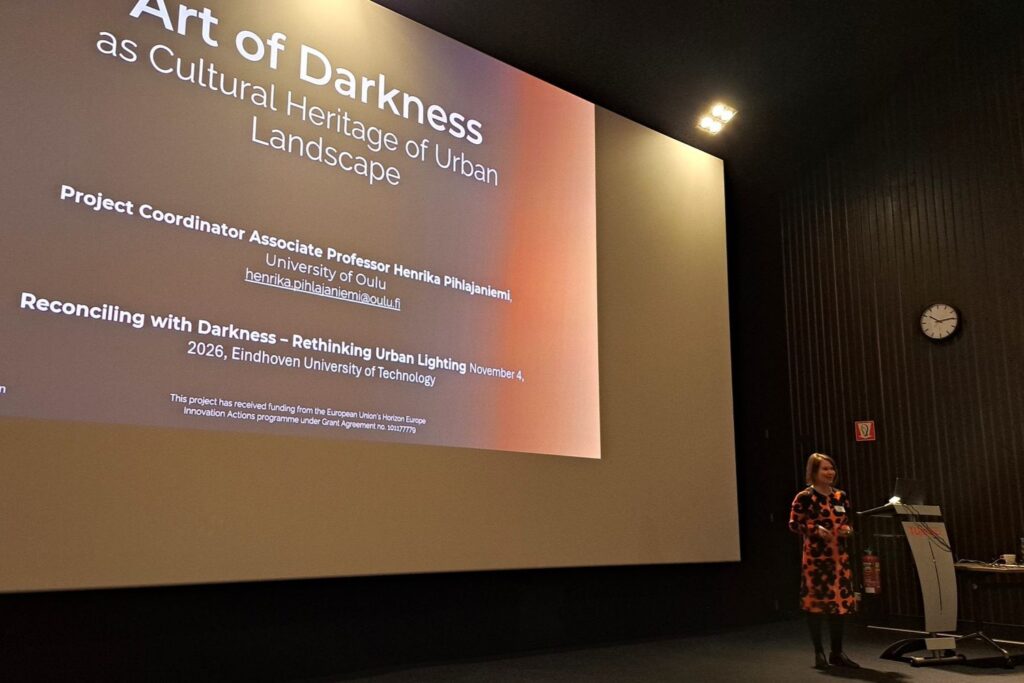
On 4 November 2026, more than 60 participants gathered at Eindhoven University of Technology (TU/e), in the Netherlands, for Reconciling with Darkness: Rethinking Urban Lighting, a one-day symposium exploring new perspectives on artificial lighting, light pollution and the value of darkness in urban environments.
Organised by the TU/e Center for Humans & Technology, the Intelligent Lighting Institute and the Art of Darkness project, the event brought together researchers, lighting designers, industry representatives, municipal professionals and students for presentations, interactive workshops and discussions.
Central to the programme was understanding how cities can move beyond seeing darkness as something to overcome and begin recognising its value.
Exploring the many dimensions of urban darkness
The symposium opened with an introduction by Antal Haans, researcher at TU/e and co-organiser of the event, followed by Henrika Pihlajaniemi, Associate Professor at the University of Oulu and Art of Darkness Project Coordinator.
The morning presentations brought together different scientific and social perspectives on artificial lighting at night.
Kamiel Spoelstra, ecologist and researcher specialising in the effects of artificial light on wildlife, explored how light pollution affects animal species, habitats and behaviour. Yvonne de Kort, Professor of Environmental Psychology at TU/e, examined the importance of natural light-dark cycles in regulating our biological clocks and supporting human health.
Kathrin Ehlert, researcher at TU/e and Art of Darkness PhD student, presented findings from nighttime walking interviews conducted in Eindhoven, investigating the positive and negative contributions of darkness to people’s well-being. Her research highlighted how, even in heavily illuminated urban environments, people can experience darkness as something positive, challenging the assumption that more light necessarily leads to better nighttime experiences.
Adding a gender perspective, Nourhan Bassam, feminist urbanist and founder of The Gendered City, explored women’s experiences of cities after dark. Her presentation questioned whether increasing lighting is always an appropriate response to feelings of insecurity, particularly when surveillance and social control take precedence over comfort and inclusivity.
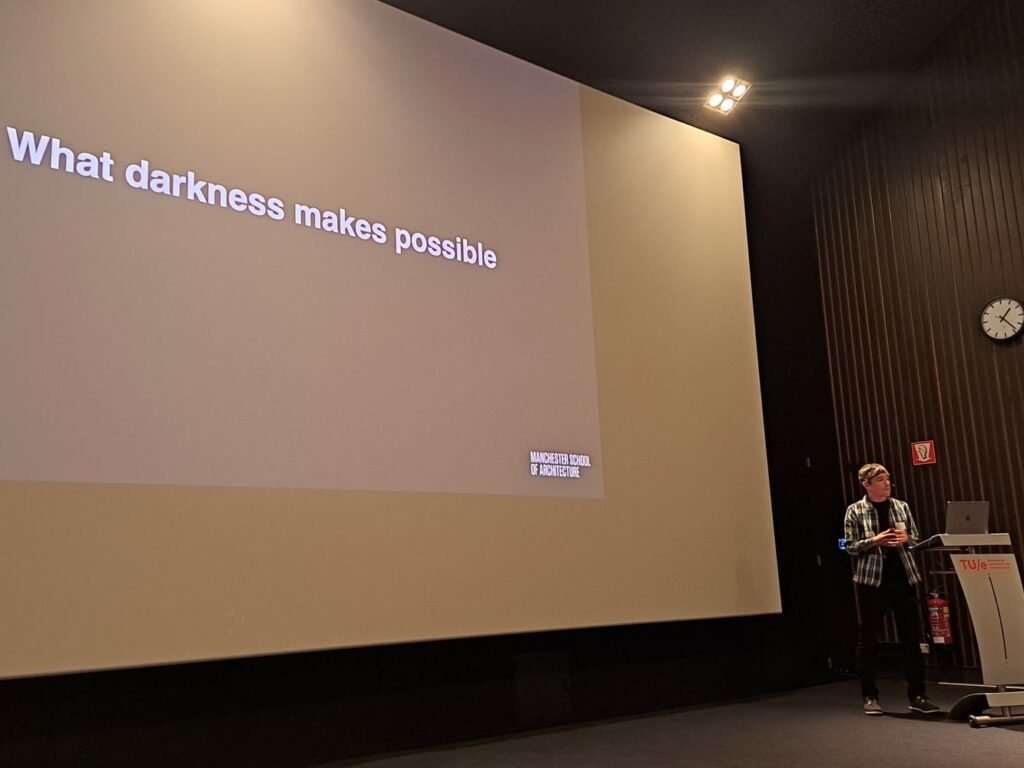
Following lunch, Nick Dunn, Professor of Urban Design at Manchester Metropolitan University and author of Dark Matters and Dark Futures, delivered the afternoon keynote, offering further perspectives on our relationship with darkness and urban futures.
To Dunn, reconciling with darkness means moving beyond simply illuminating cities to intentionally designing urban nights by considering where, when, why, and for whom light is needed. By balancing light and darkness to meet the diverse needs of people, species, cultures, activities, and times, cities can create nighttime environments that are more just, diverse, sustainable and richer in possibilities.
Co-designing darkness-sensitive lighting
The afternoon offered participants the opportunity to engage with the challenges of creating darker, more sustainable urban environments through three parallel workshops.
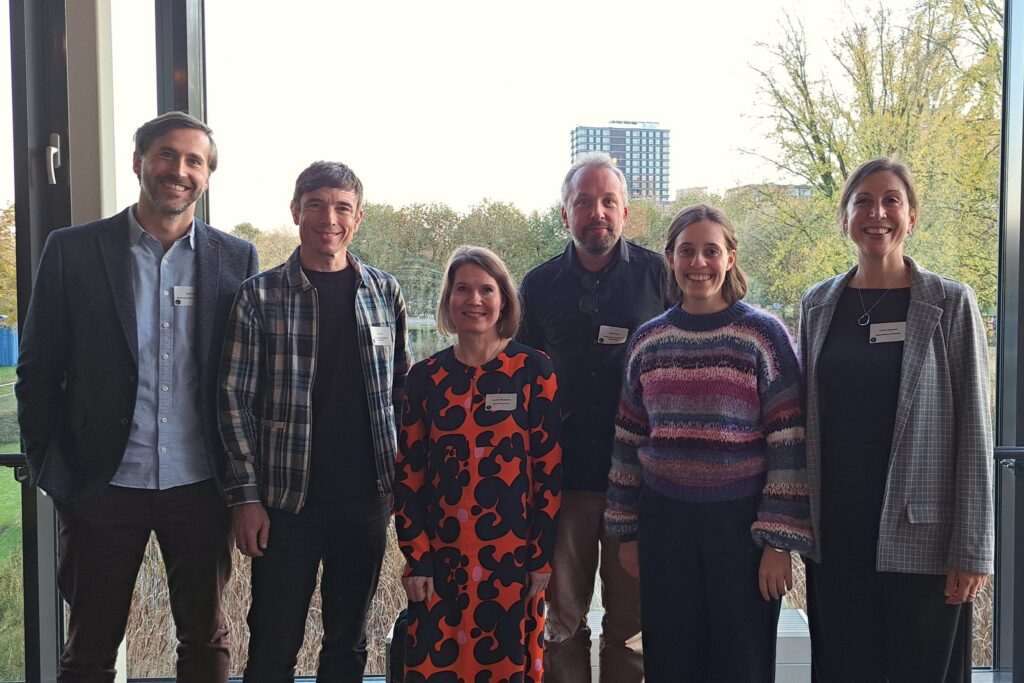
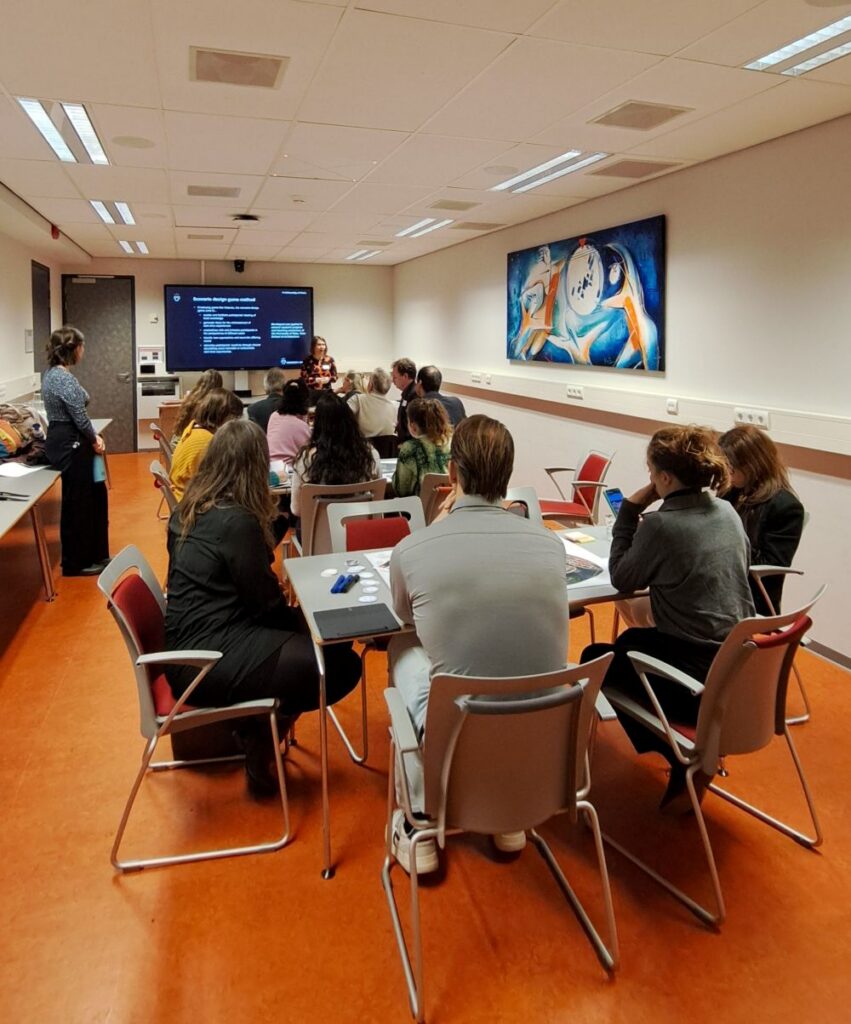
A central Art of Darkness contribution was the interactive workshop Co-designing Darkness-Sensitive Lighting with Scenario Design Game, facilitated by Henrika Pihlajaniemi and Julieta Cignacco, lighting designer and PhD Fellow at Aalborg University, with support from Kathrin Ehlert.
Using the Scenario Design Game methodology, participants collaboratively explored future scenarios for lighting in urban cultural heritage environments.
The workshop encouraged participants to consider different perspectives and needs, including those of residents, visitors and non-human species, while examining how lighting can support meaningful experiences after dark without unnecessarily compromising darkness.
Through collaborative reflection, participants explored the complex relationships between safety, accessibility, heritage preservation, environmental protection and nighttime experiences, considering both desirable and undesirable scenarios.
Two additional workshops explored practical strategies for preparing communities for darker futures and lessons from initiatives to preserve darkness across 17 Dutch municipalities.
Discussions addressed the challenges cities face when balancing environmental objectives with public expectations around nighttime safety, particularly when demands for more lighting arise following incidents in public spaces.
What would a darker urban future look like?
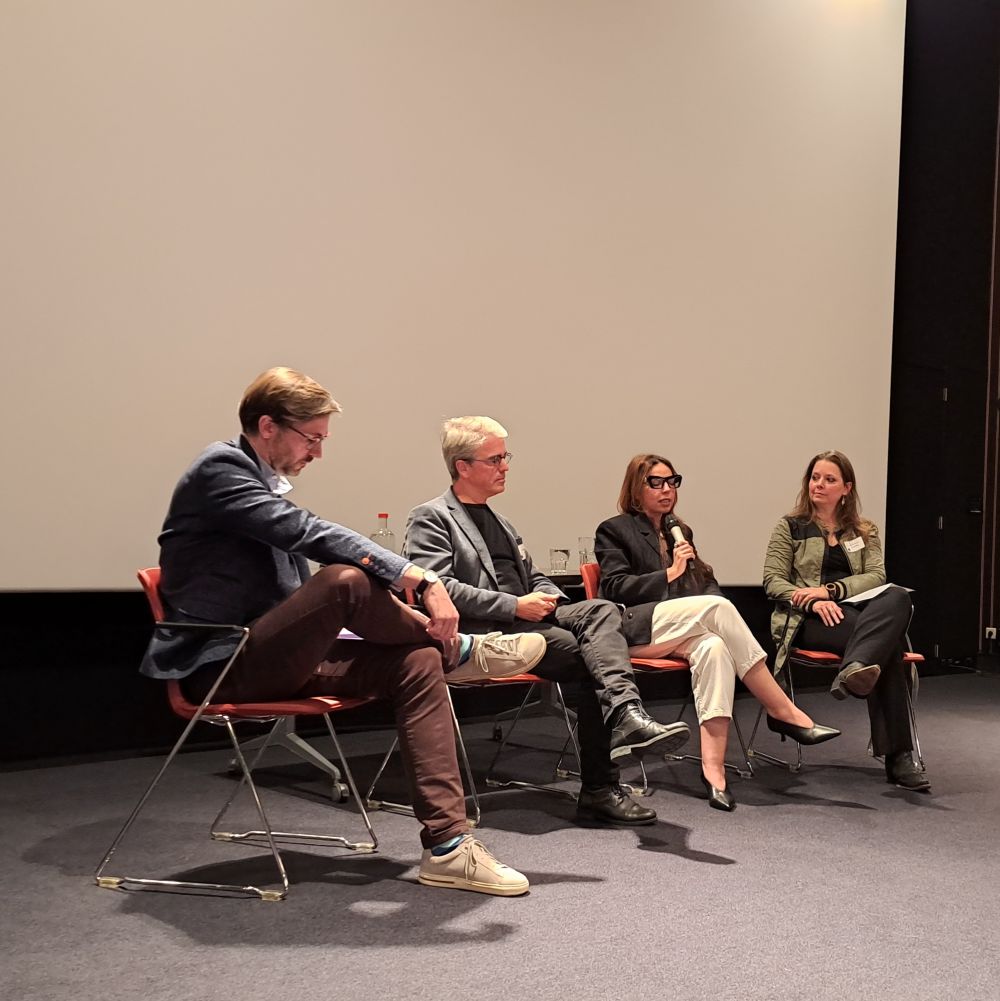
The symposium concluded with a panel discussion moderated by Taylor Stone, researcher and scholar specialising in the ethics and politics of urban lighting, inviting participants to critically examine what reconciling with darkness actually means, for whom, and how this ambition could translate into urban policies and practices.
One provocative question helped frame the debate: What would it take for Eindhoven to become the darkest city in the Netherlands by 2036?
The discussions highlighted the need to rethink when, where, why and for whom lighting is provided.
The symposium offered an opportunity to connect scientific research, municipal experiences and collaborative design approaches, demonstrating how different perspectives can contribute to a more nuanced understanding of urban darkness.
A central takeaway was that rethinking urban lighting is namely about learning how to better accommodate darkness in the cities of tomorrow.
Photos: © Julieta Cignacco