
As daylight fades over Montpellier, the emblematic Promenade du Peyrou begins to transform.
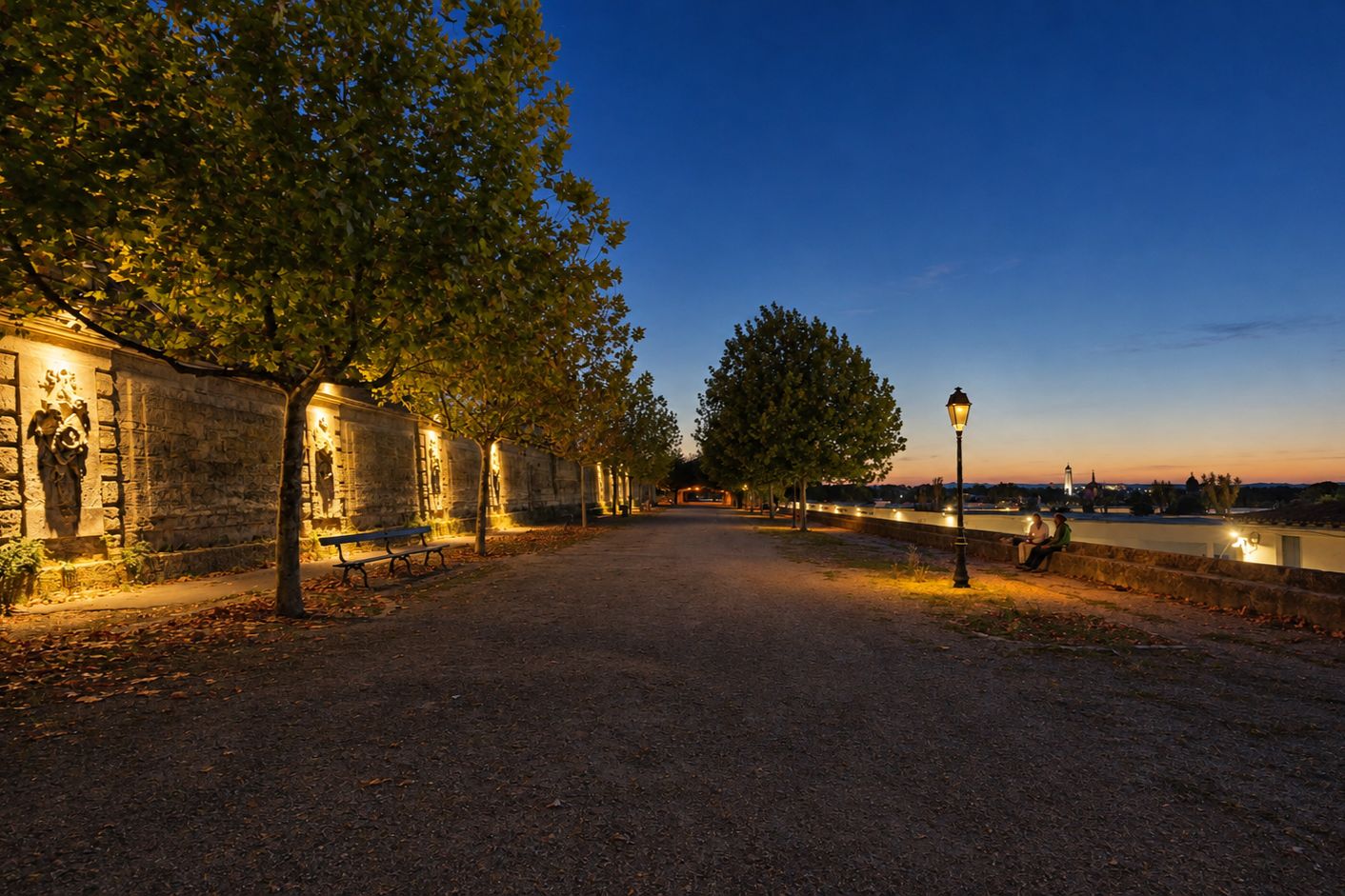
The familiar silhouettes of its trees, terraces and monumental architecture do not disappear into darkness. Instead, they emerge differently. Warm lanterns suspended among the branches create gentle pools of light. The grand stairways become welcoming pathways. The equestrian statue of Louis XIV is revealed with restraint, inviting visitors to notice details that often go unseen.
This temporary transformation is the culmination of eighteen months of collaborative work carried out through the Art of Darkness project. Now open to the public until the end of September, the Montpellier pilot site offers residents and visitors the opportunity to experience a historic public space through a new philosophy of urban lighting: one that values darkness as an essential part of cultural heritage and not something to eliminate.
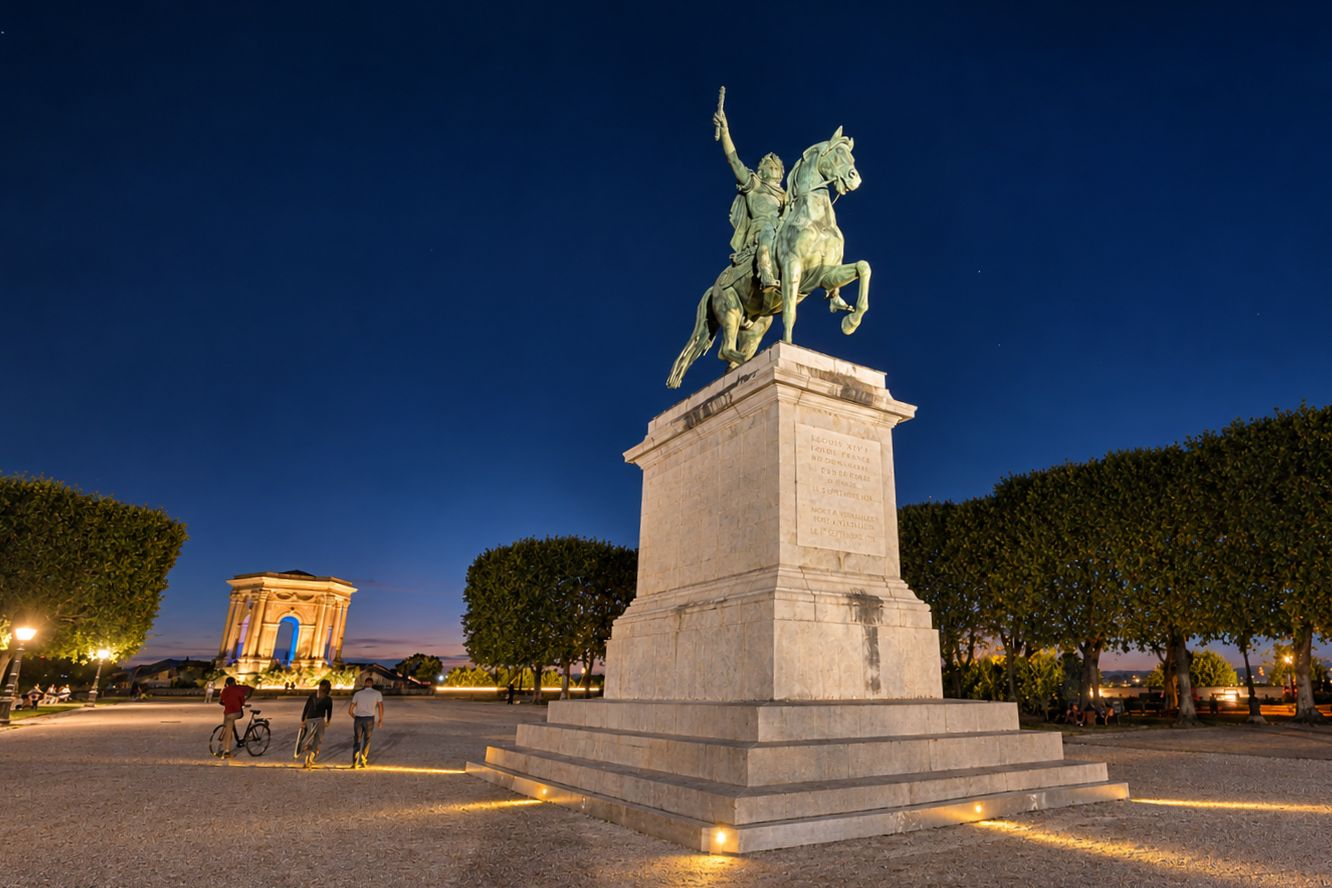
The Peyrou site explores how carefully designed light can make the night richer, safer and more meaningful while preserving the qualities of darkness.
From research to reality
The Montpellier pilot did not begin testing lighting equipment. It began with listening.
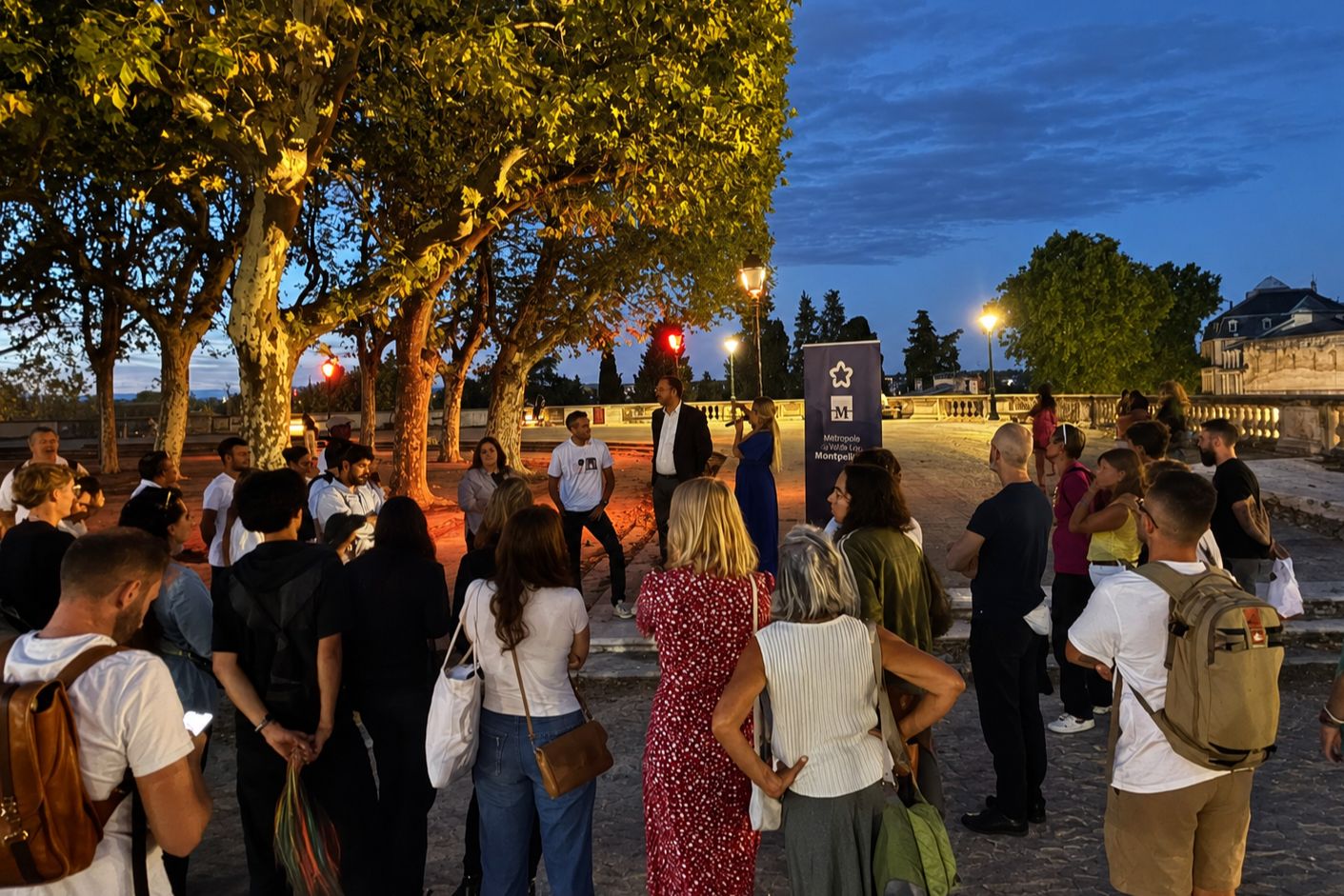
Over the past year and a half, researchers, lighting designers, heritage specialists, public authorities and local residents have worked together to understand how the Peyrou is experienced after dark. The process combined site observations, expert consultations, participatory design workshops and extensive preparatory research before a single luminaire was installed.
The co-design process was led by the National School of Architecture of Montpellier (ENSAM), which partnered with Montpellier Méditerranée Métropole and Paul Valéry University in developing the pilot site. It began with an intensive week-long workshop bringing together architecture students, who explored the Peyrou after dark, developed lighting concepts and helped establish the design directions that were later refined through participatory workshops, feasibility studies and on-site testing.
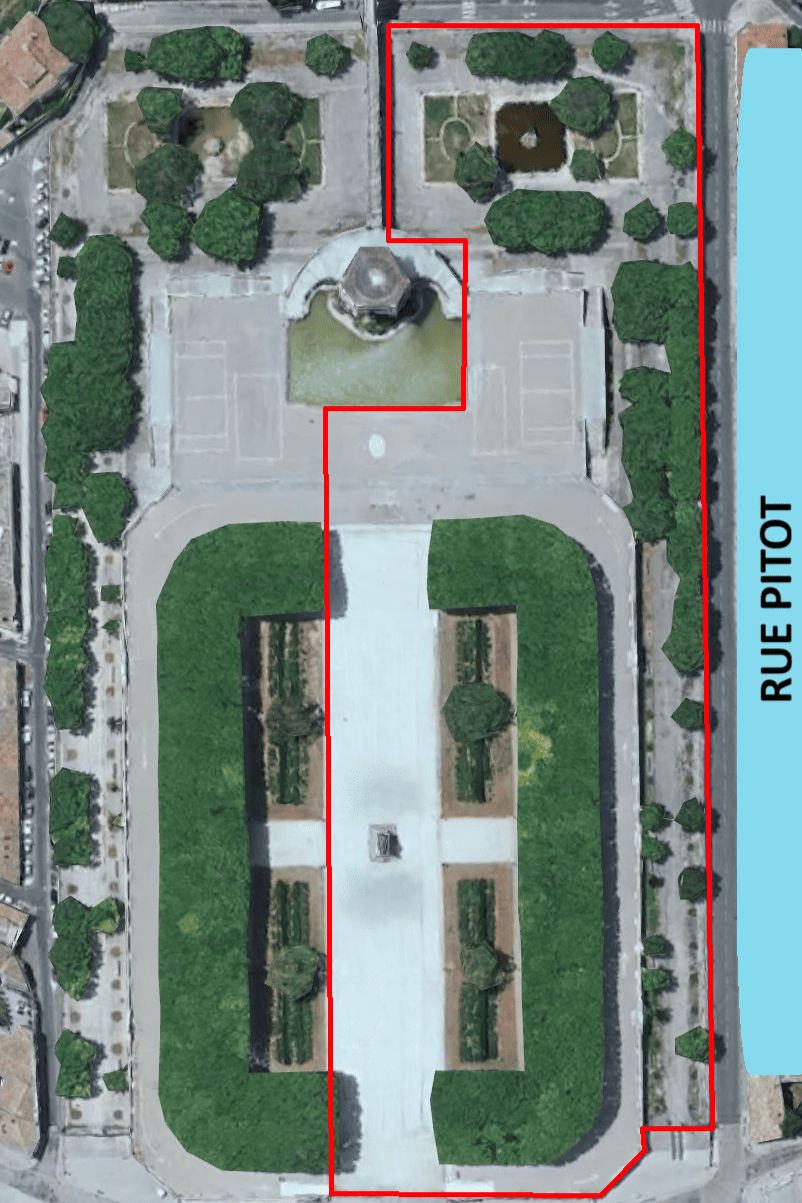
The result is a temporary full-scale experiment occupying the Pitot side of the historic promenade (see overall plan on the right for reference).
Visitors can compare this redesigned nocturnal atmosphere with the conventionally lit areas of the garden, creating a rare opportunity to experience two different approaches to urban lighting within the same heritage site.
The intervention pursues three closely connected objectives:
- enhance the experience of cultural heritage through lighting that respects darkness;
- strengthen visitors’ comfort and sense of safety;
- raise public awareness of the value of preserving dark urban environments.
The project explores how these three goals can reinforce one another through thoughtful design.
Seeing a familiar place differently
The Peyrou is one of Montpellier’s most recognisable public spaces. By day, it is a destination for walkers, families and tourists. At night, however, many people previously crossed it quickly or avoided certain areas altogether.
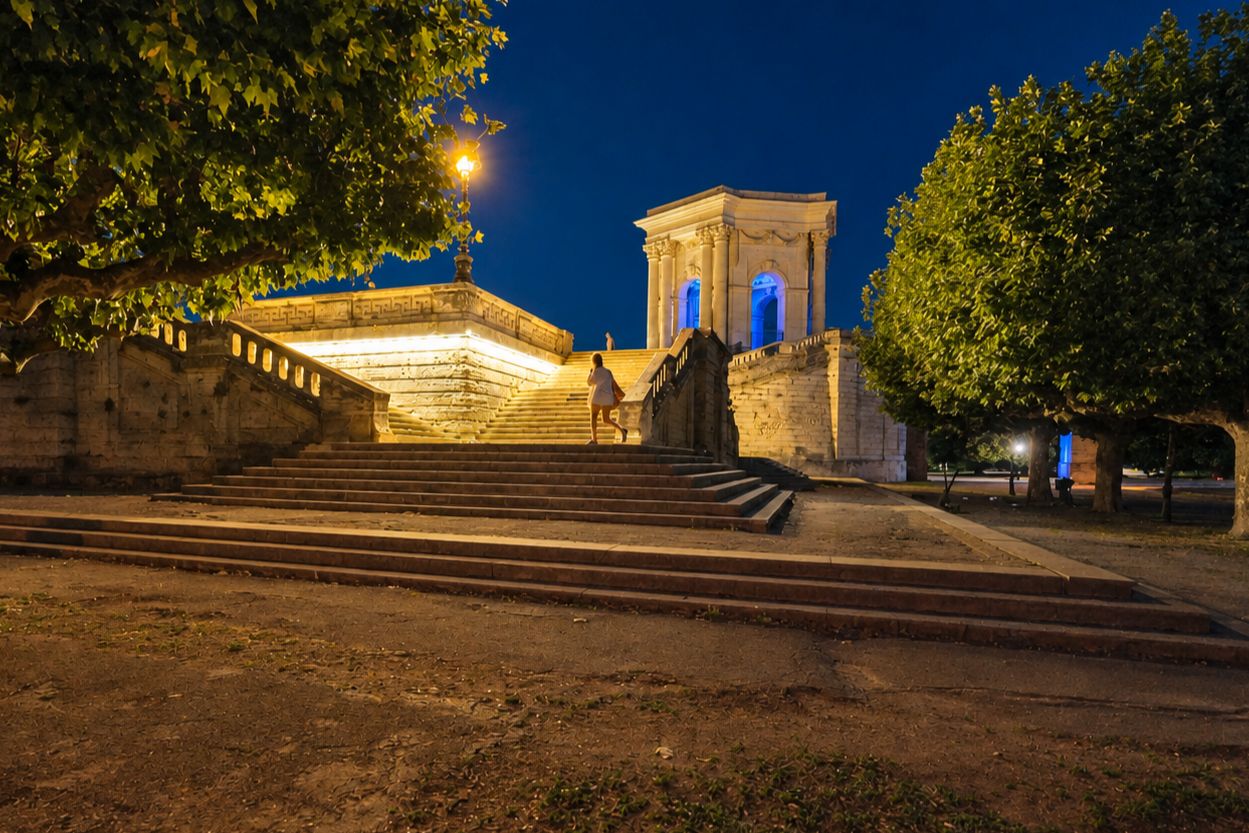
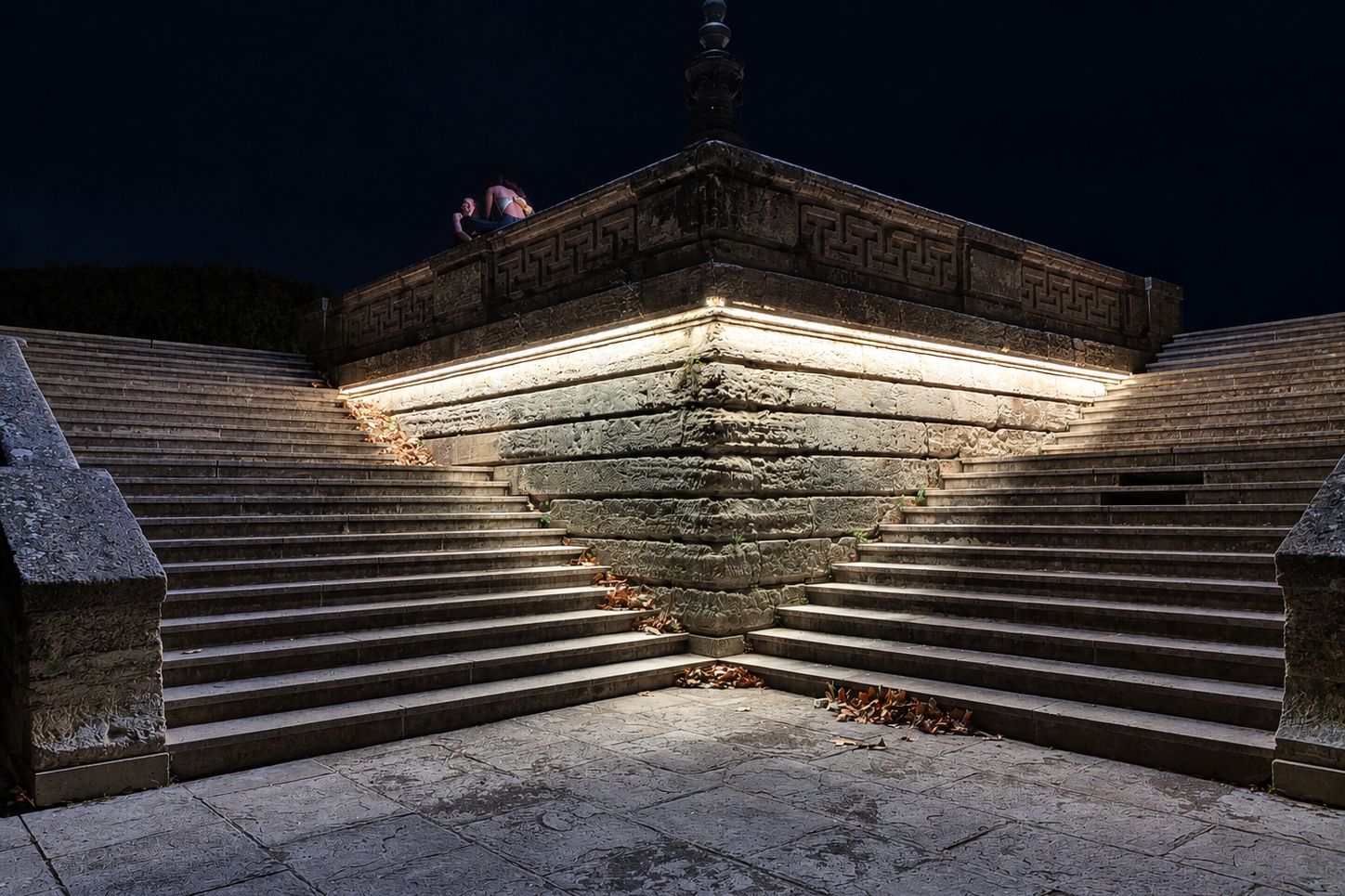
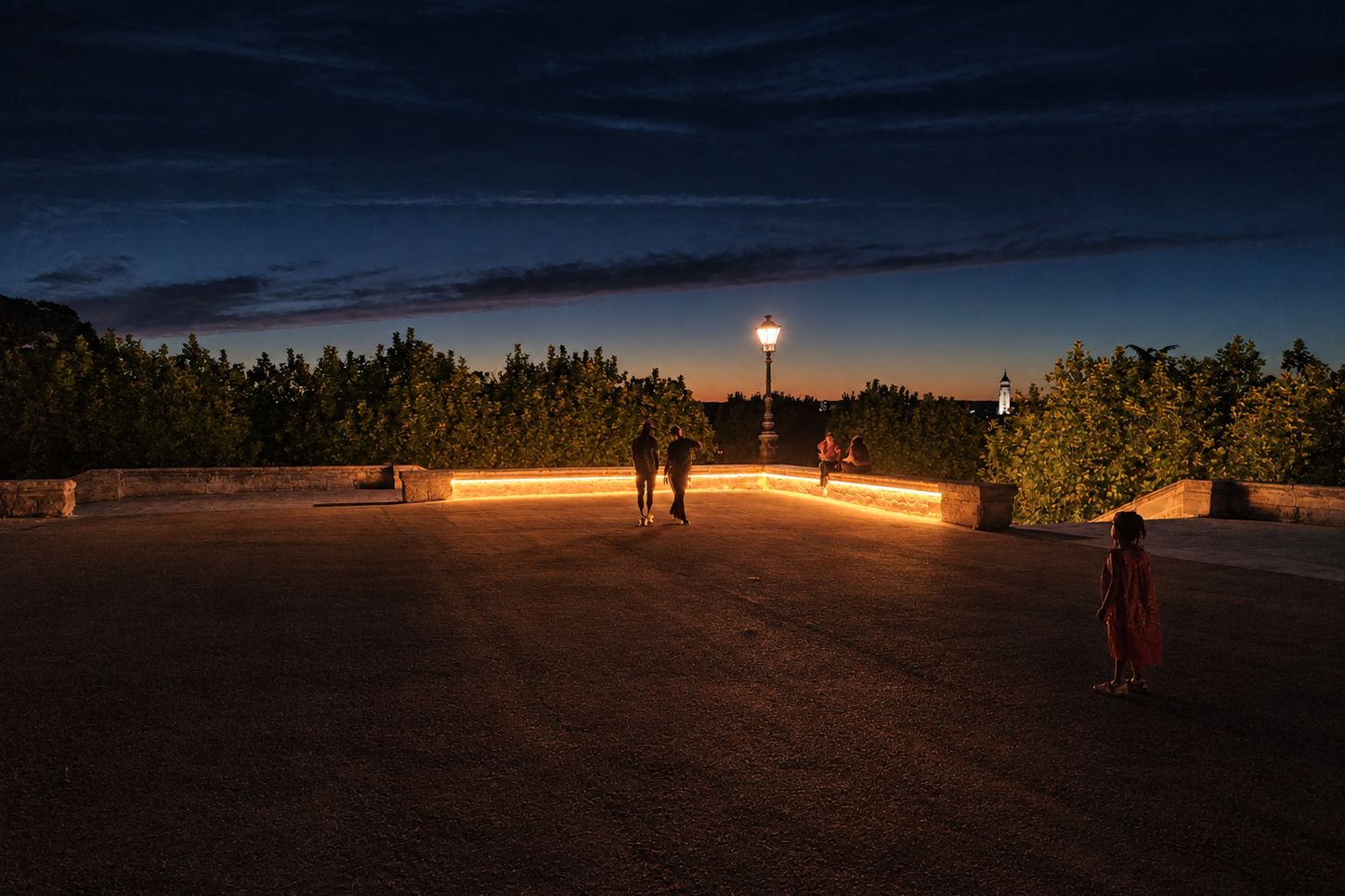
The temporary lighting installation deliberately avoids overwhelming the landscape. Instead of flooding the space with brightness, it works through contrast, revealing architectural details, vegetation and movement while allowing large portions of the site to remain naturally dark.
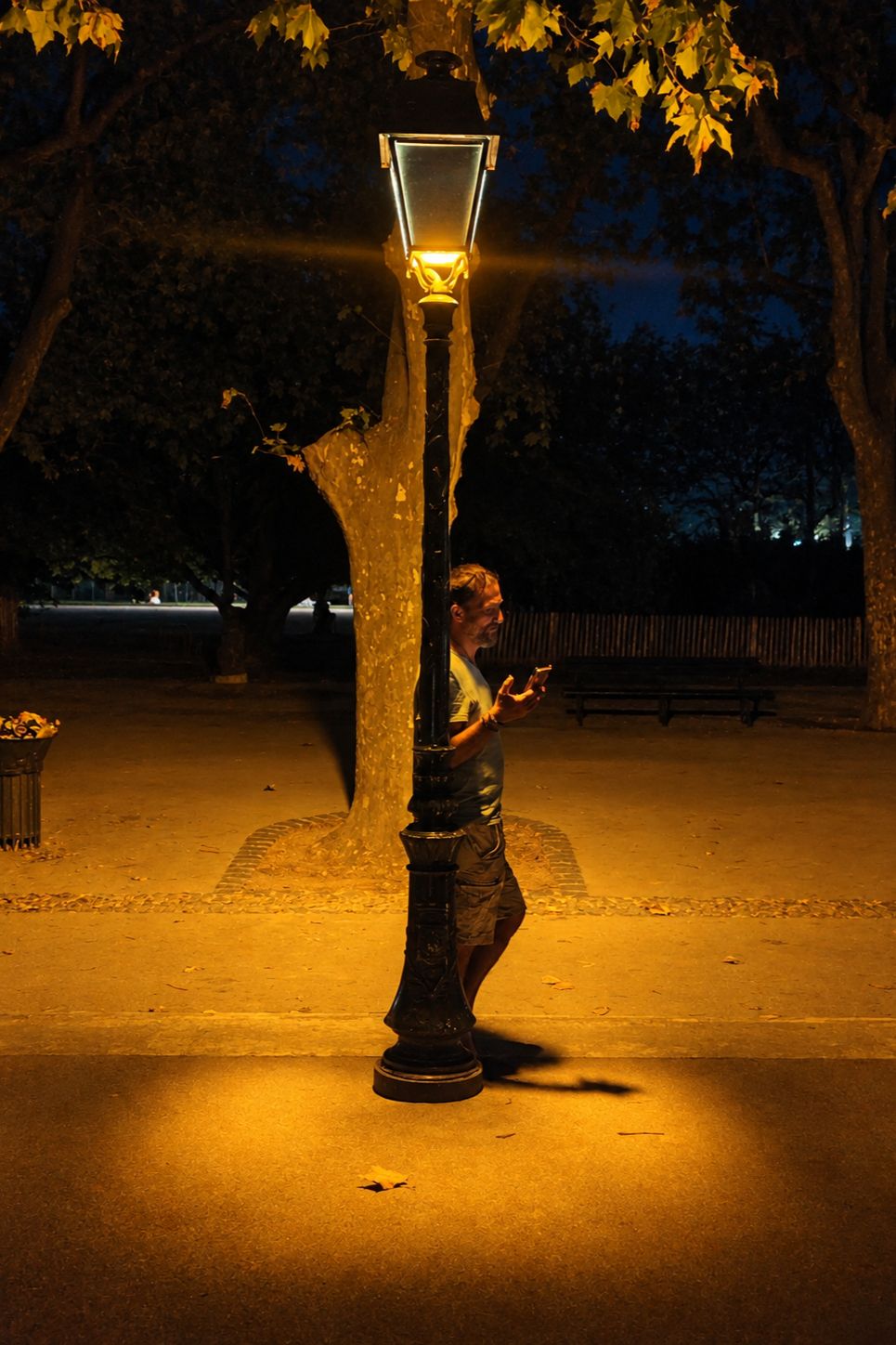
Much of the existing lighting equipment has been retained and adapted, with selected faces of the heritage-style luminaires masked and fitted with filters to redirect or soften the light. This low-tech approach shows how existing infrastructure can be creatively adapted to support a different experience of the night.
For Bruno Martinez, official tour guide at the Montpellier Tourist Office, this has fundamentally changed the way visitors encounter the monument: Working on this lighting project […] was an opportunity to rethink this prestigious site and give it a new face at night. The square is enhanced by gentle, reassuring and poetic lighting that accompanies visitors while inviting them to look at the sculpted details, the decorative elements and the equestrian statue of Louis XIV. Very often, we do not take the time to look at the everyday things around us; here, thanks to the lighting, they take on a new dimension and re-enchant a place we thought we already knew.”
His observation captures one of the central ambitions of the Montpellier pilot: lighting as a guide for attention. Just as a guide leads visitors through a story with words, light can quietly direct the eye towards overlooked elements of heritage.
The result is an experience that feels less theatrical than intimate, encouraging slower exploration and closer observation.
Designed with the people who use it
A defining feature of the Montpellier pilot is that local residents were involved long before the public installation opened.
Participatory workshops invited inhabitants to discuss existing lighting conditions, identify problematic areas and imagine alternative nocturnal atmospheres. These conversations directly informed the design choices later developed by the project’s technical and academic partners.
The collaborative approach also extended to the local lighting industry. Four suppliers partnering with the City of Montpellier agreed to lend lighting equipment for the temporary installation, making the experiment possible through an original public-private collaboration built specifically for the European project.
For many participants, the process was as valuable as the final installation itself. The project recognised everyday users as experts in how the space actually functions after dark.
That collaborative approach continues throughout the public exhibition. Information panels installed at the entrances explain the experiment and invite visitors to contribute via QR-code questionnaires, turning every evening walk into potential research data.
The Peyrou therefore becomes more than a demonstration site: it becomes a living laboratory where public experience helps shape future recommendations for heritage lighting across Europe.
Listening to the night
The first reactions from visitors offer a glimpse into how the new lighting is changing the experience of the site.
During one evening, around ten individuals and groups of friends spending time on the lower terrace of the Promenade were asked whether they regularly visited the area at night and whether they had noticed a change. The response was remarkably consistent: “Yes, it’s so much better than before.”
For several visitors, this was closely linked to a stronger feeling of safety. The difference was not simply a matter of brightness, but of how and where the light was used, creating a more comfortable atmosphere for spending time there.
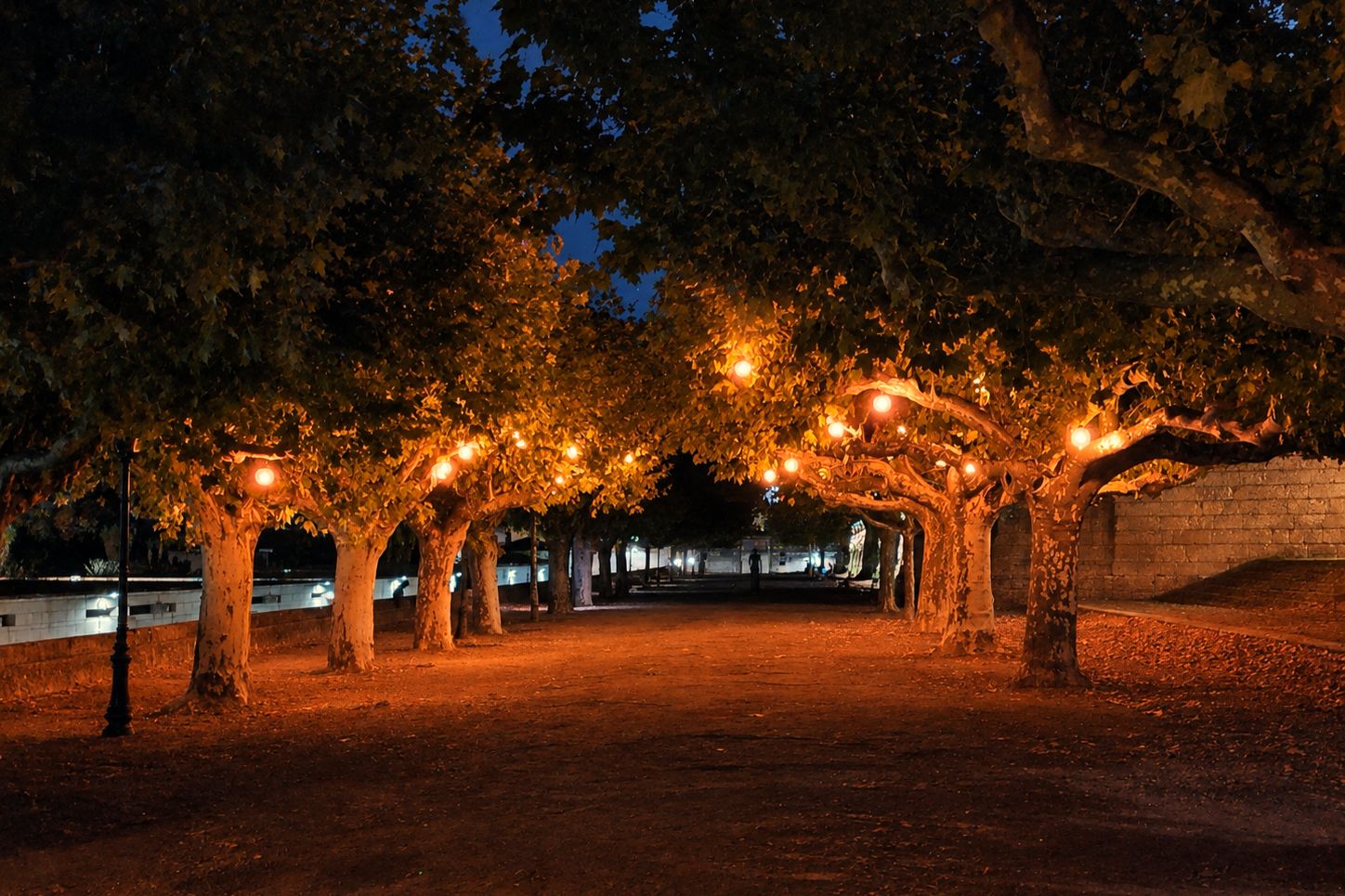
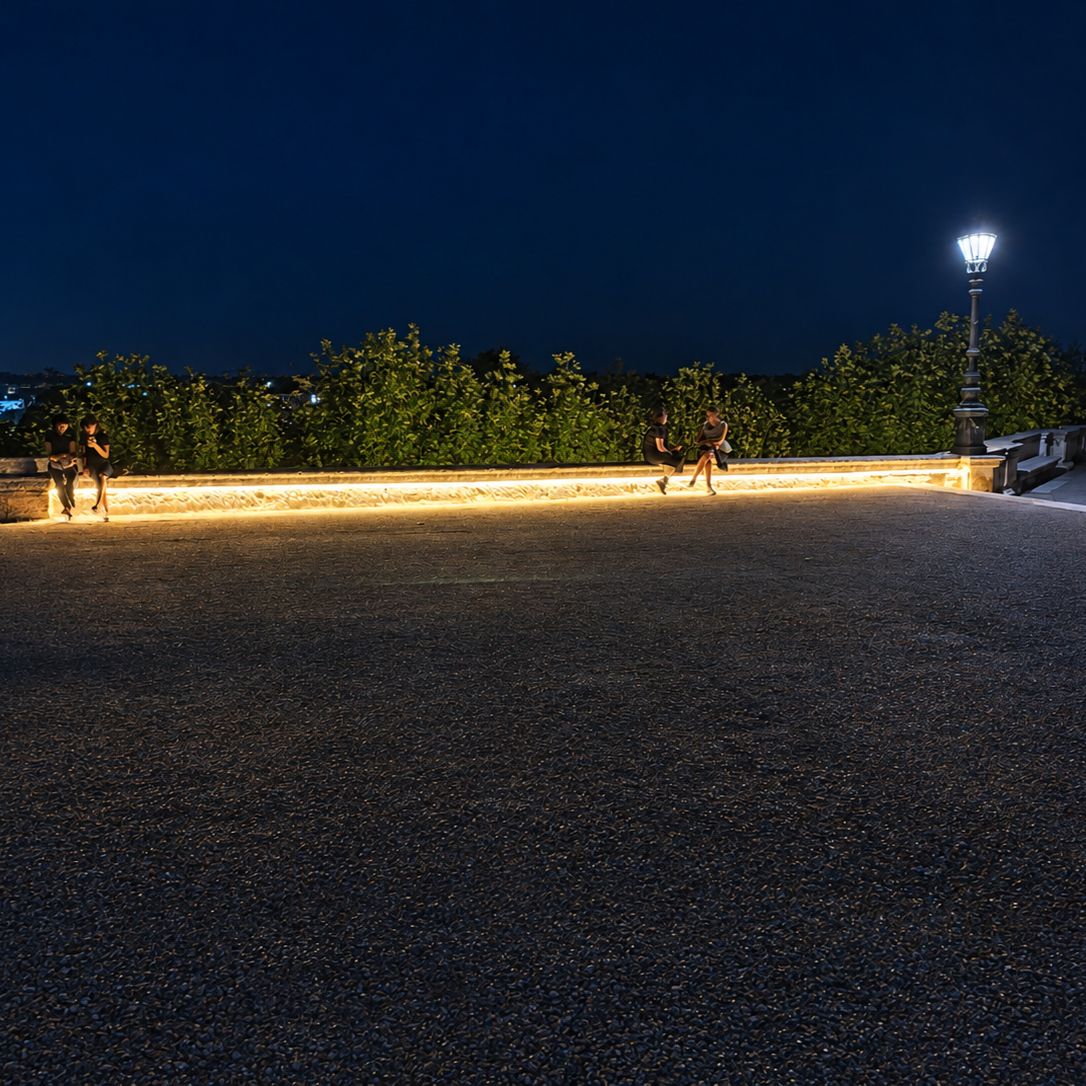
One person sitting alone on the parapet overlooking Rue Pitot had already sent several videos of the site to her family, particularly captivated by what she described as “the orange lights dancing in the trees.”
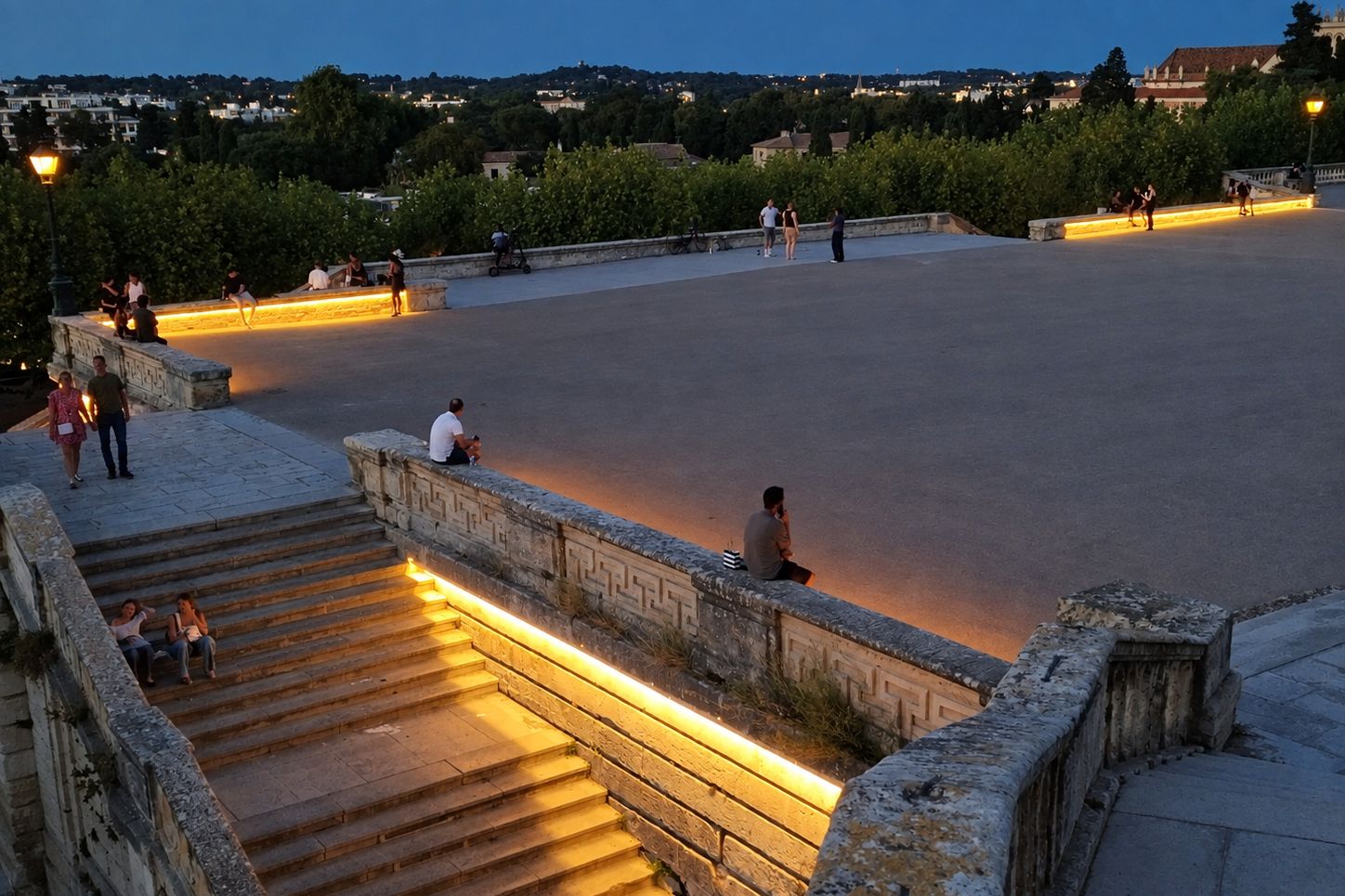
Another observation revealed how people naturally appropriated the redesigned space. The brightly illuminated handrails alongside the stairways became spontaneous gathering points, with groups choosing to sit nearby because, as one participant explained, they needed that concentrated light “to see each other when they’re talking.”
Together, these reactions point to an important aspect of the experiment: people do not necessarily need or want more light everywhere. What matters is having the right light in the right place, supporting different activities and ways of experiencing the night while allowing darkness to remain part of the landscape.
Measuring experience, not just light
The Montpellier pilot is also testing something less visible: how we evaluate nocturnal public space.
Alongside the lighting installation, researchers from Paul Valéry University’s Department of Psychology have developed an assessment protocol that examines visitors’ perceptions of heritage, comfort, safety and darkness itself. Participants use their smartphones to complete questionnaires while experiencing the site, allowing impressions to be captured in real time.
This human-centred evaluation complements technical measurements and environmental observations. Together, they will contribute to the broader Art of Darkness research, which is developing a methodological model to help European cities renovate heritage lighting while respecting nocturnal landscapes.
The emphasis is not on identifying a universal lighting solution, as the project recognises that successful night-time environments emerge from the relationship between place, people and context.
A temporary installation with lasting ambitions
Although the lighting intervention will remain in place only until the end of September, its significance extends well beyond this temporary exhibition.
The knowledge generated in Montpellier will feed into the collective work of the five Art of Darkness pilot cities, alongside Oulu, Tallinn, Copenhagen and Bologna. Each explores different cultural landscapes and urban conditions, contributing complementary insights into how darkness can become an active design resource.
At the Peyrou, that ambition is already visible in the way people inhabit the space. Visitors linger on terraces that were previously overlooked. Conversations gather around softly illuminated stairways. Architectural details emerge without dominating the night sky. Heritage becomes something to experience and not just observe.
Perhaps the most meaningful achievement of the Montpellier pilot is that it changes expectations. Instead of asking whether a public space is bright enough, it invites a more thoughtful question: what kind of night do we want our historic cities to offer?
Until the end of September, anyone walking through the Promenade du Peyrou after dusk can become part of that conversation and help shape the future of heritage lighting in Europe.
Photos: ©Damien Giraudie & G. Thepot