
How can light and darkness reshape the experience of public space after dark? As part of the development of the Art of Darkness pilot site at Scaravilli Square, the University of Bologna organised a series of workshops and co-design activities exploring how people perceive, inhabit, and imagine urban spaces at night.
Bringing together students, researchers, artists, and participants from different disciplinary backgrounds, the initiative combined speculative exercises, collective walks, temporary lighting interventions, and artistic experimentation to question dominant assumptions surrounding darkness in the city.
These activities progressively informed one another, creating an evolving research process through which the University of Bologna team tested how nocturnal imaginaries can be transformed through both discussion and embodied experience.
FIRST explorations through role play
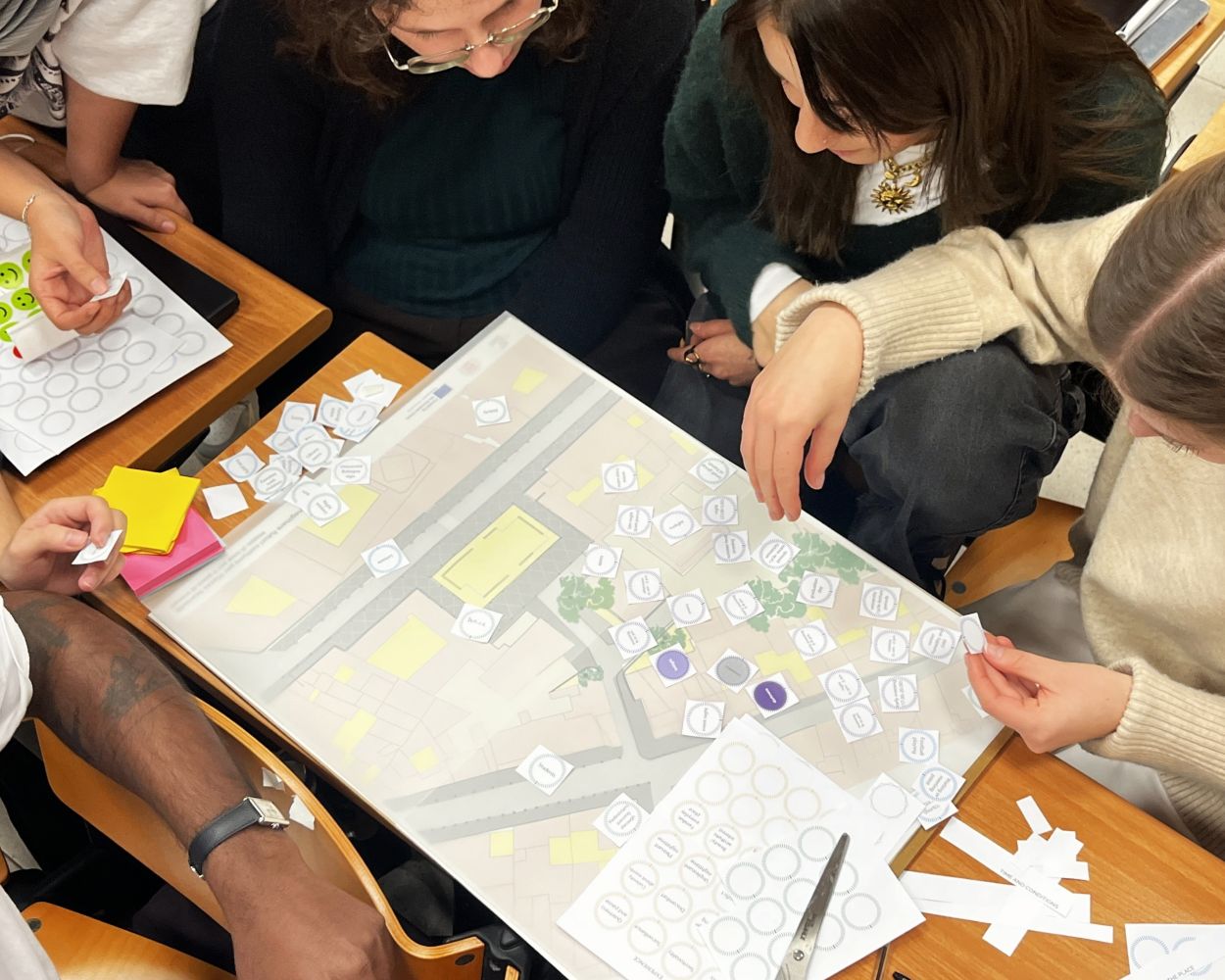
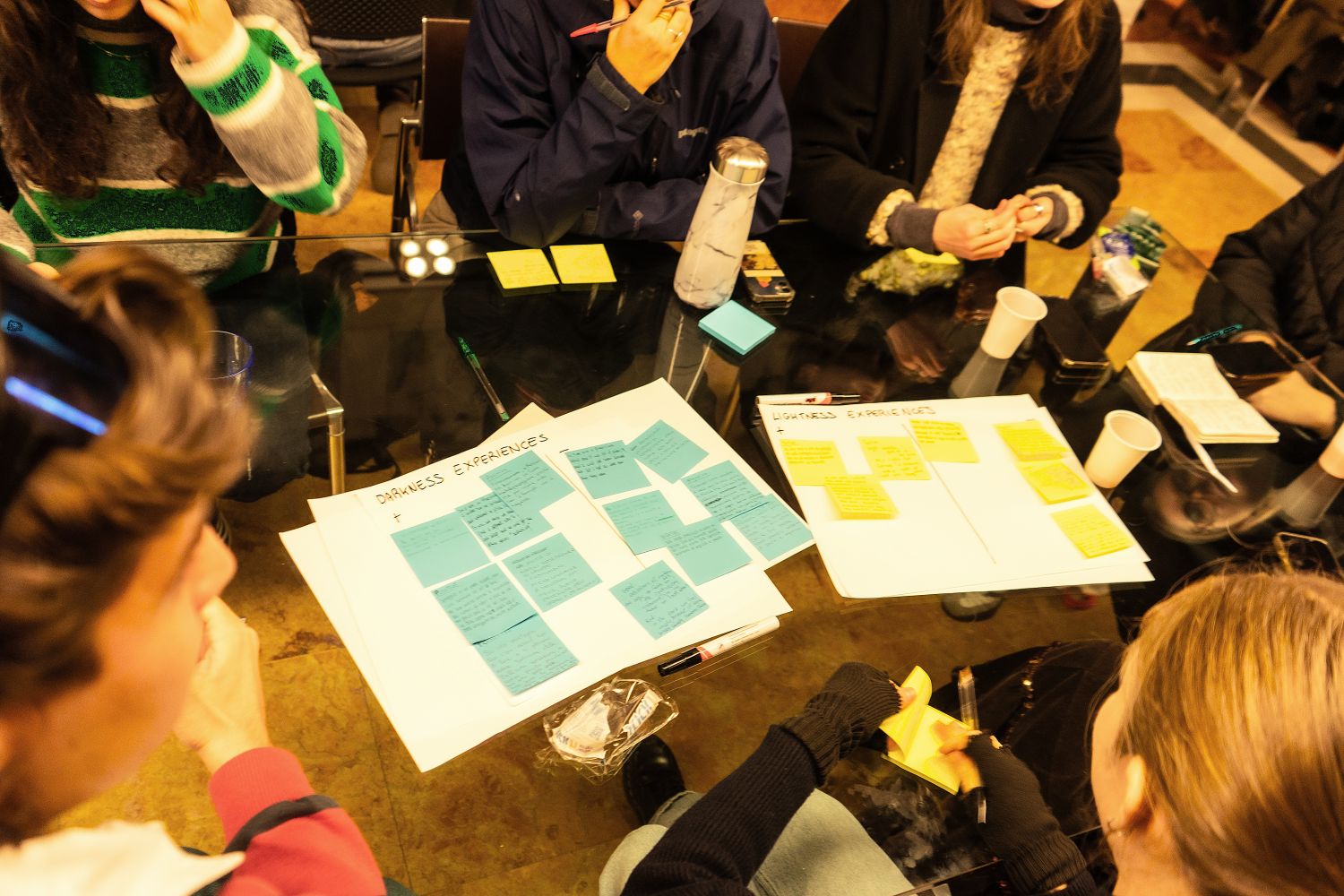
The first workshop introduced the Scenario Game methodology developed by partners at the University of Oulu and adapted to the context of Bologna. Participants from Master and Doctoral programs from the Department of Architecture, engaged in an analogue role-playing game designed to explore possible futures for Scaravilli Square at night.
The outcomes revealed a clear tension. Despite being exposed to alternative approaches to urban darkness, most groups still associated safety and activation with increased lighting. Future scenarios consistently prioritised brightness, visibility, and programmed activity over darker or more atmospheric conditions.
This became an important early insight for the project: even when conceptual understanding shifts, the instinctive equation between light and safety remains dominant. It also confirmed that discussing darkness in abstract terms is not enough; it must be experienced collectively and physically in space.
From discussion to embodied experience
Building on these findings, the following co-design workshop week shifted the focus from speculative discussion toward direct experimentation in Scaravilli Square itself. At the centre of the initiative was a broader question: how can public spaces overcome what organisers described as a “crisis of imaginability” at night?
Scaravilli Square is often perceived as a transitional space associated with anxiety or insecurity after dark. The workshop sought to challenge these perceptions by transforming both the atmosphere of the square and participants’ relationship to it.
The programme combined theoretical reflection with direct spatial interventions. Participants explored the history of artificial lighting and questioned how conventional urban illumination often prioritises surveillance and functionality over atmosphere, emotion, and collective experience.
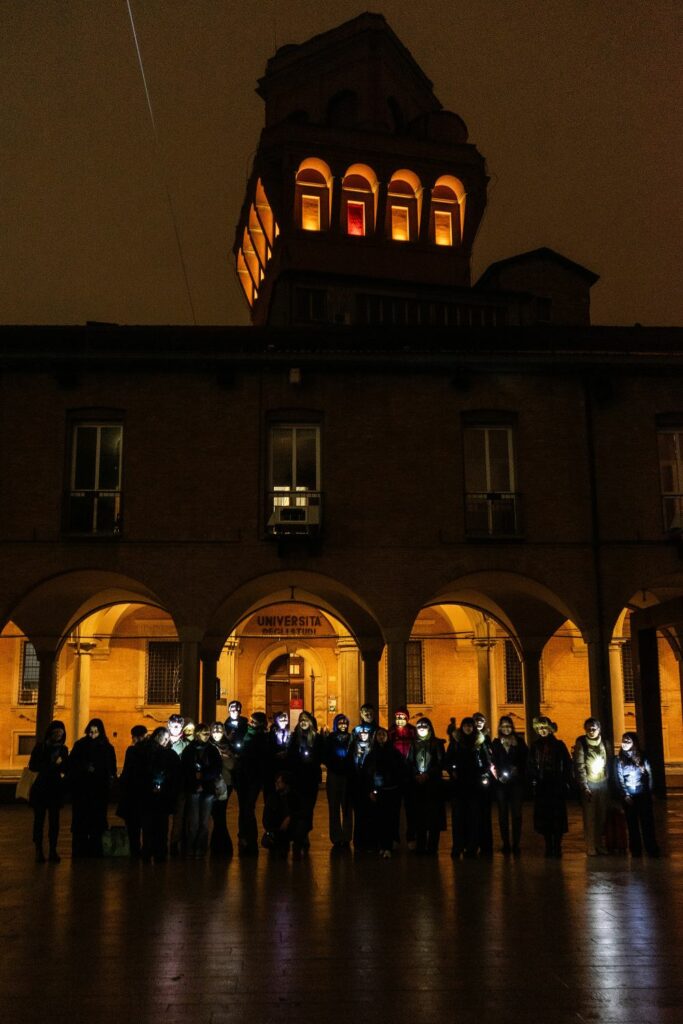
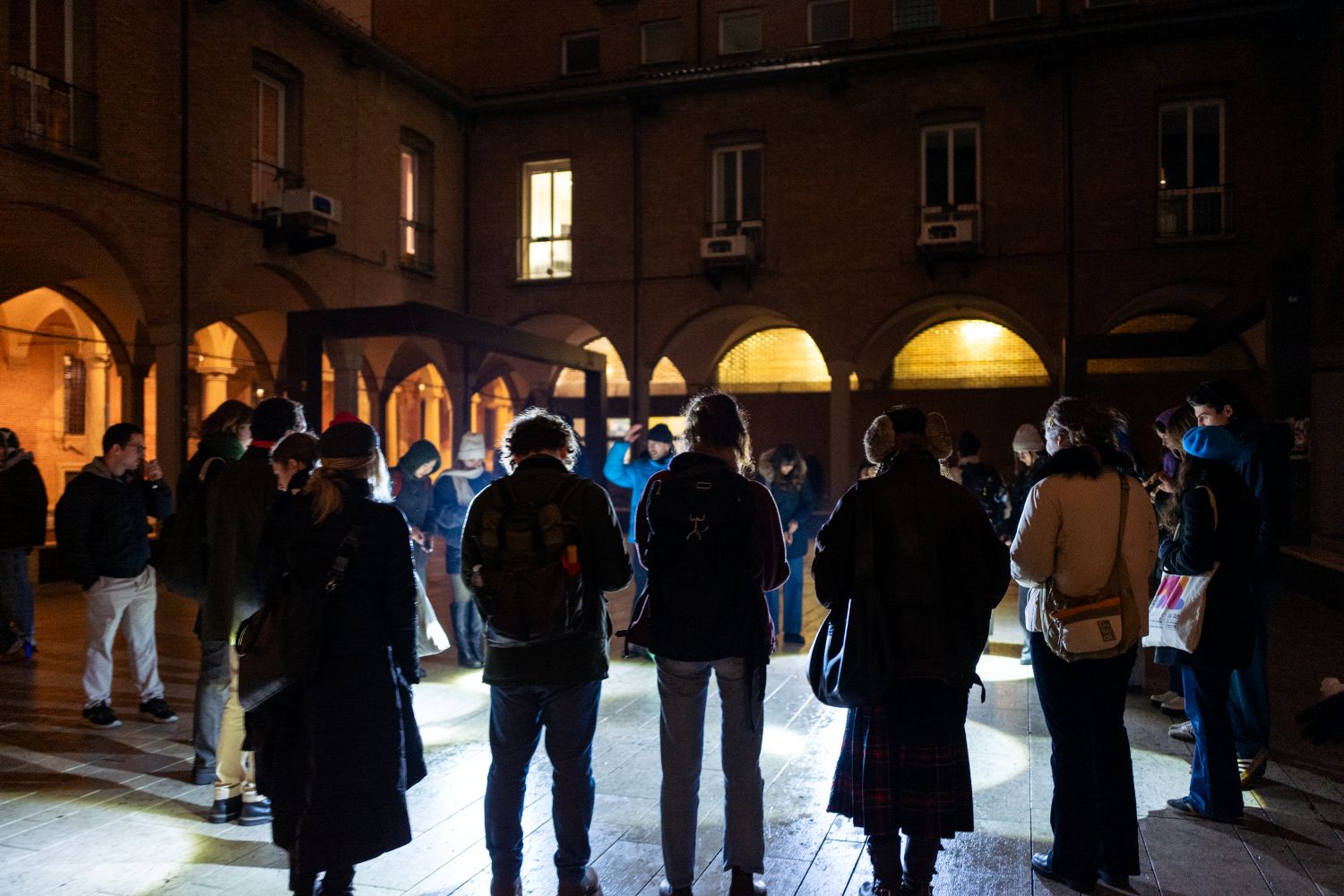
A perception walk through the University District culminated in a coordinated blackout in Scaravilli Square, allowing participants to experience the space without its usual illuminated hierarchies. This moment opened up discussions on the latent qualities of darkness and the underused potential of the square’s lighting infrastructure.
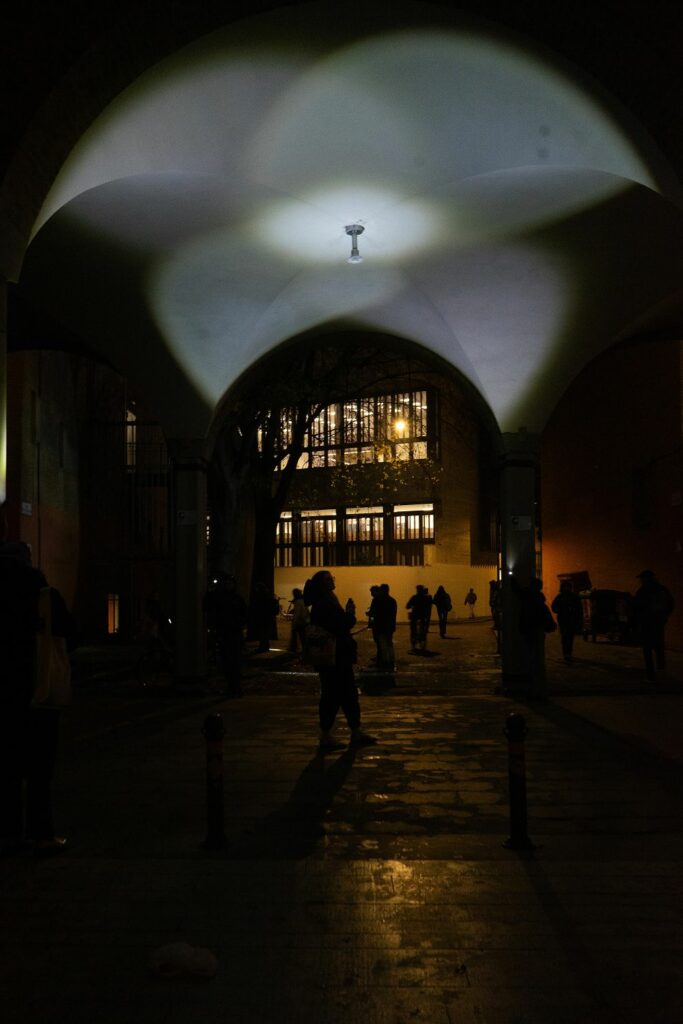
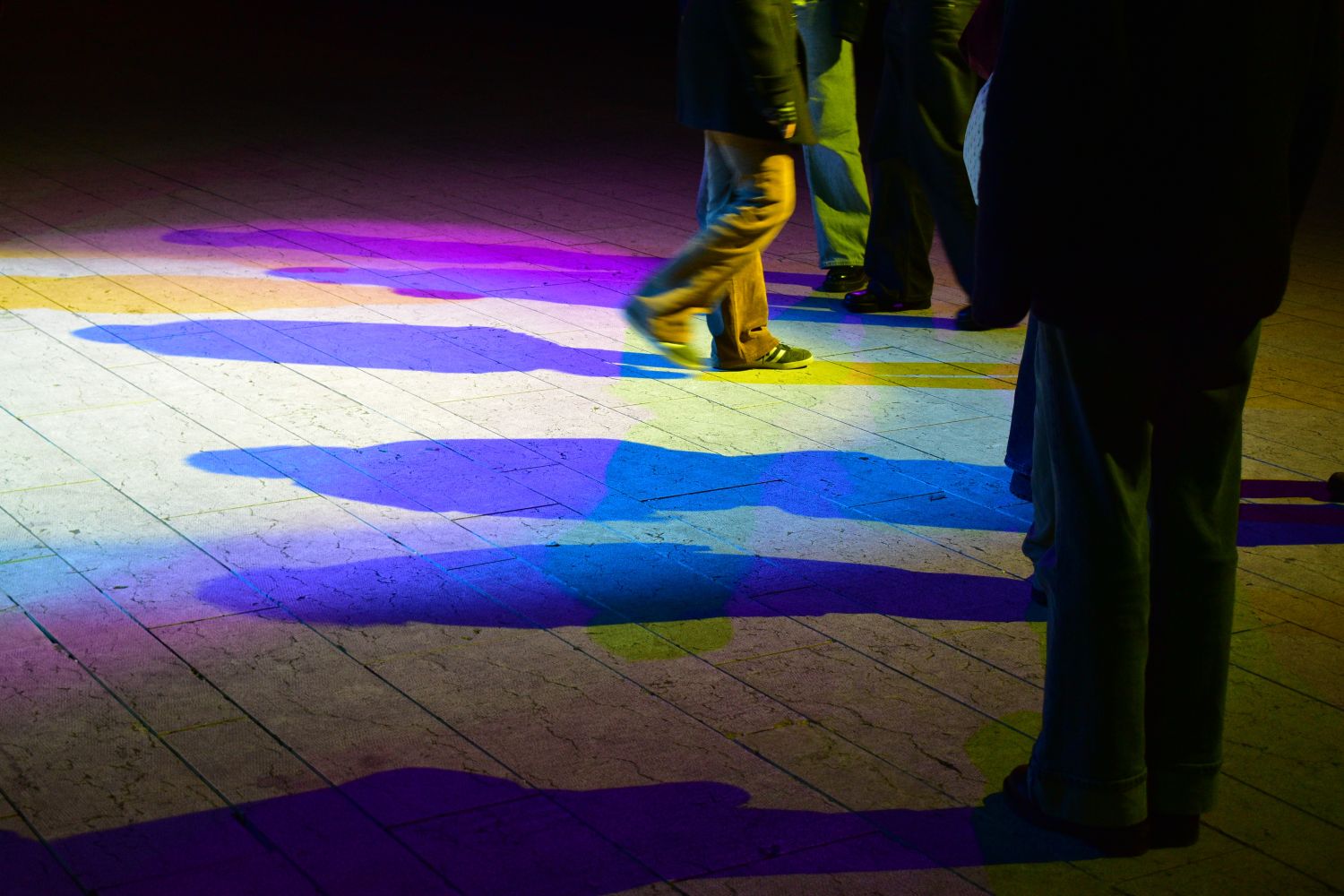
The workshops then moved into an experimental phase centred around guerrilla lighting and collective light choreographies coordinated by the University of Bologna team. Using simple flashlights and temporary interventions, participants tested how light could temporarily reshape architecture, movement, and social interaction within the square.
Instead off relying exclusively on fixed infrastructure, participants were invited to actively curate their visual environment — deciding what to illuminate, what to conceal, and how darkness itself could become a spatial resource.
Artistic practices and collective agency
The co-design week culminated in two artist-led workshops developed in collaboration with the selected artists for the pilot project.
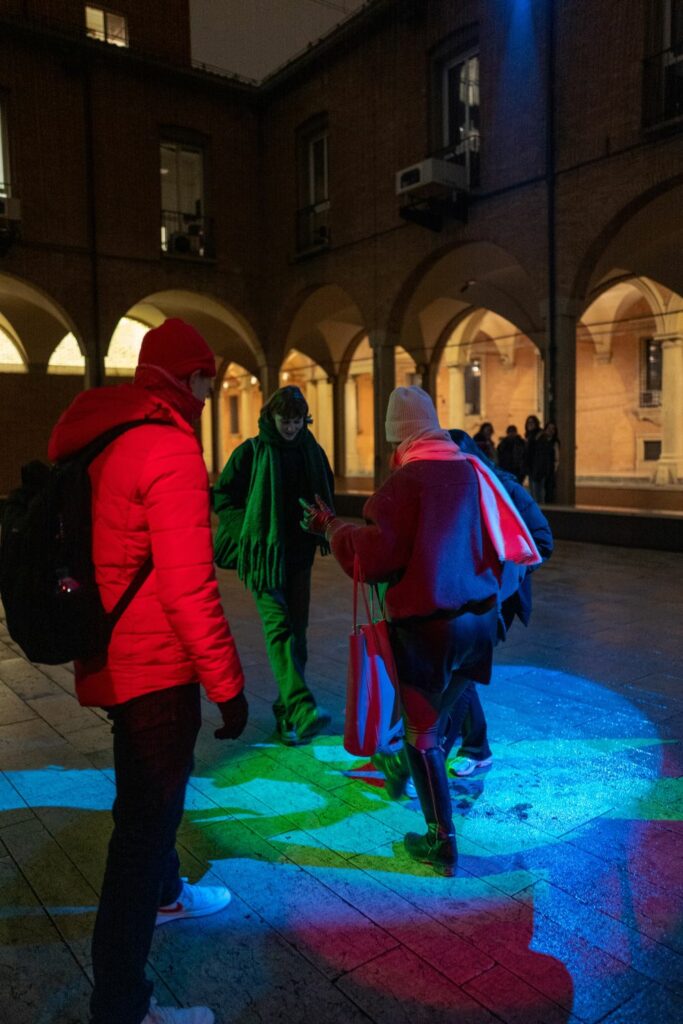
Multimedia artist Martina Stella guided participants through process-oriented actions in near-total darkness. Participants exchanged a single light source between one another, creating gestures centred on trust, presence, and collective interaction. These actions were later projected at large scale onto surrounding façades, transforming intimate exchanges into shared public narratives.
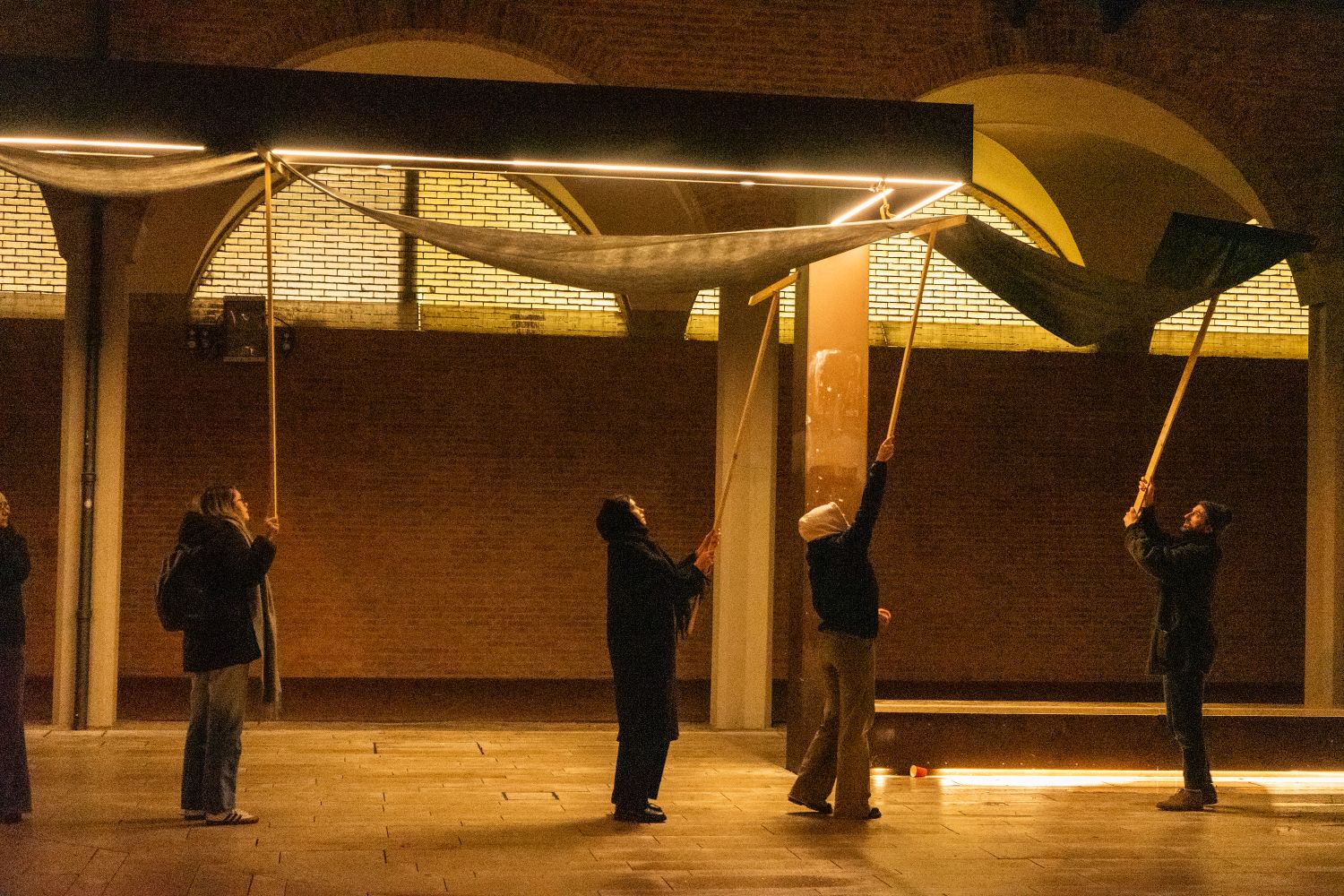
Collettivo ATI approached the square via a series of in-situ games and low-tech experimentation. Participants used unconventional lighting tools and interventions, including exercises that blocked or redirected existing light sources in order to actively “sculpt” darkness within the space.
Participants were encouraged to intervene directly within the nocturnal environment, not just observe it. Through collective occupation of the square and manipulation of light and shadow, they developed a more embodied relationship with the site.
Post-workshop evaluations reflected this shift. While initial responses frequently described Scaravilli Square as uncomfortable after dark, participants increasingly began to describe darkness as a resource capable of generating atmosphere, creativity, and social connection.
Returning to the Scenario Game
The insights from the co-design workshop informed a new series of Scenario Game sessions organised later with students from advanced design and architecture-engineering programmes at the University of Bologna.
Unlike the earlier iteration, these sessions were restructured to introduce embodied experience before speculation. Collective night walks, shared moments of darkness, and guerrilla lighting exercises were integrated upstream, before participants were asked to design future scenarios for Scaravilli Square.
The resulting proposals showed both continuity and gradual shift. A large proportion of groups still associated activation with illumination and programmed events. Night markets, projections, performances, participatory media installations, and cultural programming remained dominant strategies for “improving” the square after dark. Concerns around visibility, safety, and spatial legibility persisted, particularly regarding corners and perceived thresholds.
At the same time, a smaller but significant set of proposals began to question these assumptions. One group proposed a “Spettacolo di Buio” (“Spectacle of Darkness”), framing darkness as a cultural and perceptual event rather than a problem to eliminate.
From understanding to a new experience of the night
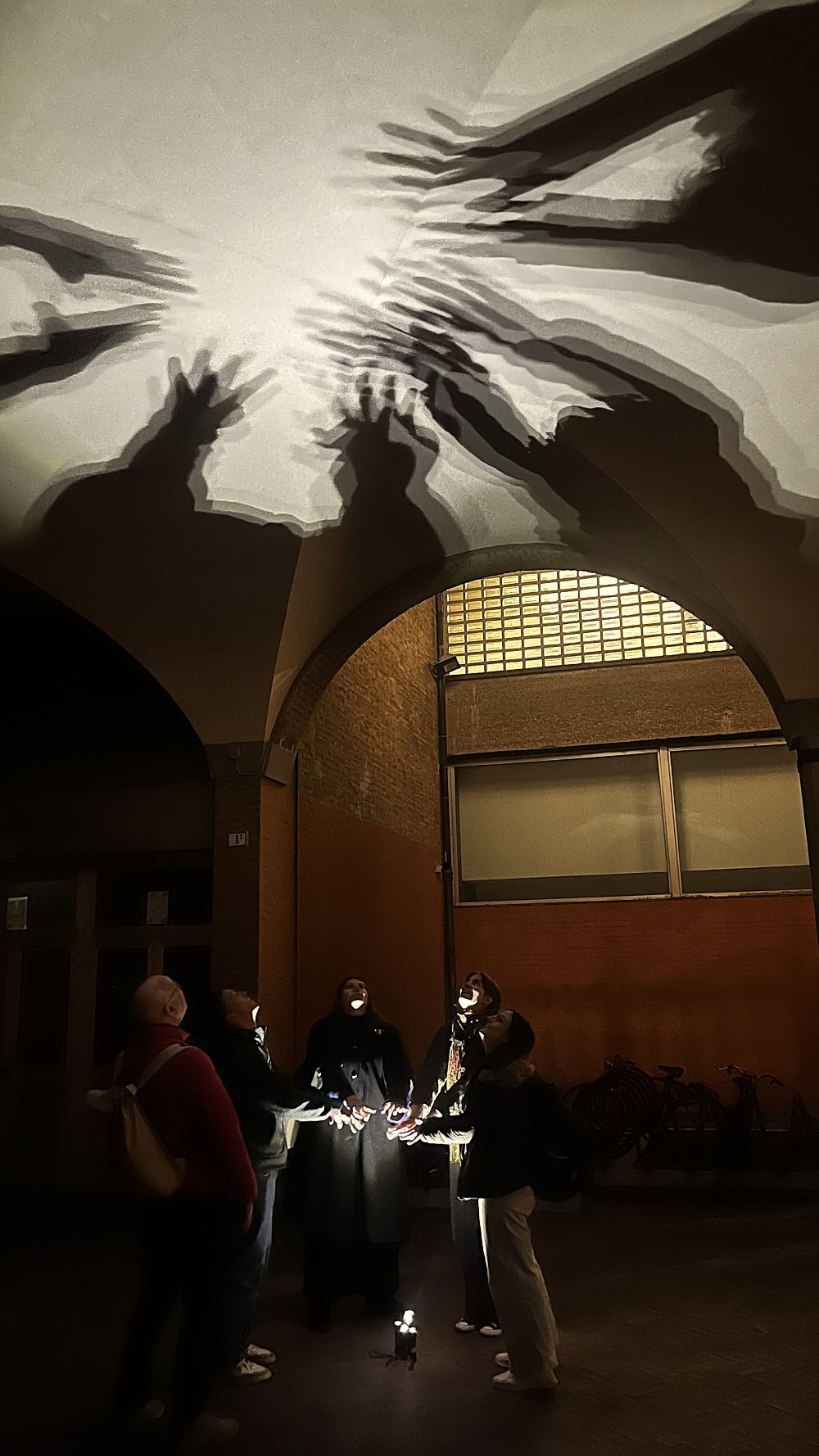
Across the workshops, a consistent pattern emerged: conceptual awareness shifted faster than embodied perception. Participants became more capable of articulating alternative narratives for Scaravilli Square and critically engaging with dominant lighting paradigms, yet their affective relationship with the space — how it is felt, navigated, and emotionally registered after dark — remained largely unchanged.
This gap became one of the central findings of the process. Reframing darkness requires more than new conceptual tools; it requires repeated, structured encounters with the night that allow perception to evolve through experience.
Each iteration of the workshops contributed to this gradual process — not by reversing existing associations between darkness and risk, but by introducing an additional layer alongside them: one in which darkness can be worked with, shared, and understood as part of the spatial identity of the city.
The most significant transformation is not a shift in perception but the slow emergence of a memory of agency. Through repeated collective engagement, walking, inhabiting, and intervening in the square, participants began to develop a more confident relationship with the night. Darkness remained something to navigate, but also, increasingly, something to inhabit.
Photos: © UNIBO, Martin Flugelman Olmeda, Nicole Marchi & Nicolò Sinatra